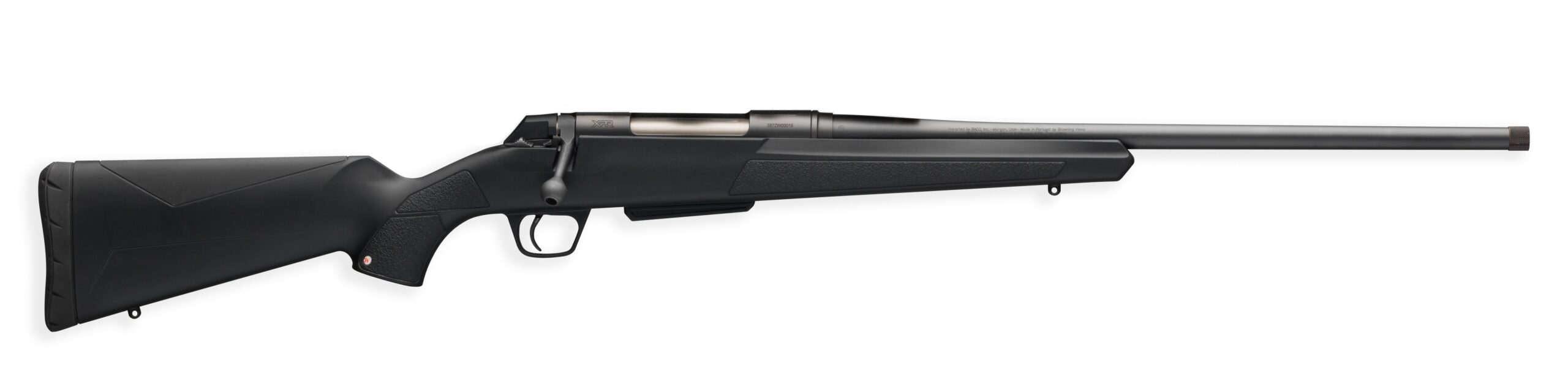
Winchester XPR SR .30-06 20″ Threaded Barrel Rifle
Pros & cons
What works
- Factory-threaded 5/8x24 muzzle — saves $200–$300 vs. gunsmith threading
- M.O.A. trigger breaks at 3.5 pounds — 1 pound lighter than most factory triggers
- Weighs 6.7 pounds — 0.8 pounds lighter than a comparable wood-stock .30-06
- 20-inch barrel improves maneuverability in brush — 4 inches shorter than standard hunting rifles
Trade-offs
- No iron sights included — adds $100–$200 for a scope and base
- 3+1 capacity — lower than some modern rifles like the Browning X-Bolt’s 4+1
- Synthetic stock lacks checkering — may slip when wet without additional grip tape
Video review
Expert review
Specs at a glance
About this product
The Winchester XPR SR .30-06 20” Threaded Barrel Rifle is a suppressor-ready bolt-action hunting rifle chambered in .30-06 Springfield with a 20-inch barrel featuring a 5/8x24 thread pattern for muzzle devices. This rifle incorporates Winchester’s M.O.A. trigger system derived from the Model 70 for a clean break, along with a drilled-and-tapped receiver for optic mounting and a synthetic stock built for field durability. Designed for hunters and precision shooters who require accessory flexibility, it balances practical handling with the power of the .30-06 cartridge in a compact, threaded configuration.
What is the Winchester XPR SR used for?
The Winchester XPR SR is engineered for medium to large game hunting and precision range use, particularly where suppressors or muzzle brakes are desired. Its 20-inch barrel and .30-06 chambering deliver effective terminal performance out to 400 yards on elk or deer, while the threaded muzzle allows for recoil reduction or sound suppression where legally permitted. This rifle excels in wooded or brush-heavy environments where a shorter barrel improves maneuverability without sacrificing ballistics.
How does the Winchester XPR SR compare to the Stevens 334 Rifle | .308 Win, 20in Matte Black Synthetic?
The Winchester XPR SR offers superior trigger performance and aftermarket support compared to the Stevens 334 in .308 Win, though the Stevens is typically $100–$150 cheaper. Winchester’s M.O.A. trigger system breaks crisply at 3.5 pounds versus the Stevens’ spongier factory pull, and the XPR’s 5/8x24 thread is more common for .30-caliber suppressors than the Stevens’ ½x28 pattern. However, the Stevens 334 provides comparable accuracy and durability for budget-conscious hunters who don’t plan on threading accessories.
What does it weigh and what are the dimensions?
The Winchester XPR SR weighs 6.7 pounds unloaded and measures 40.5 inches in overall length with a 20-inch barrel. Its 1-in-10-inch twist rate stabilizes .30-06 bullets up to 180 grains effectively, and the synthetic stock contributes to the lightweight build without adding bulk. The balance point sits 12 inches from the receiver, making it quick to shoulder and steady off-hand.
Who is this NOT for?
This rifle is not ideal for long-range benchrest shooting or users in states with restrictive suppressor laws. The 20-inch barrel sacrifices some velocity compared to a 24-inch .30-06, dropping muzzle velocity by approximately 75 fps, which affects trajectories beyond 500 yards. Additionally, hunters in California or New York may find the threaded barrel legally problematic unless they plan to pin-and-weld a brake or leave it bare.
What’s in the box?
The rifle ships with one 3-round detachable box magazine, a thread protector, and owner’s manual—no optic mounts or tools included. The thread protector screws on to the 5/8x24 muzzle threads to prevent damage during transport, and the magazine is constructed from polymer with a steel feed lip for reliability. Buyers will need to budget for a scope and base, as the receiver is drilled and tapped but not furnished with hardware.
Is the Winchester XPR SR worth it at $606.99?
At $606.99, the Winchester XPR SR justifies its price for shooters who value out-of-the-box suppressor readiness and a refined trigger. Compared to custom-threading a barrel for $200–$300, the factory threading and M.O.A. trigger save time and gunsmithing costs, making it a sensible choice for hunters transitioning to suppressed firearms. For those content with a non-threaded option, the Stevens 334 in .308 Win offers similar performance at a lower entry point.
Key attributes
| upc | 048702007118 |
| manufacturer | Winchester |
| manufacturer part number | 535711228 |
| package width | 9.7 |
| package height | 3.4 |
| shipping weight | 9.4 |
| product type | Rifle |
| action | Bolt Action |
| barrel length | 20" |
| number of magazines | 1 3 rd. |
| capacity | 3 + 1 |
| caliber/gauge | .30-06 Springfield |
| atf type | RIFLE |
Frequently asked questions
- Is it compatible with a .30-caliber suppressor?
- Yes, the 5/8x24 thread pattern is standard for .30-caliber suppressors like the SilencerCo Omega 300 or Dead Air Nomad. Ensure your suppressor is rated for .30-06 pressures, which typically handle up to 60,000 PSI. Thread engagement is 0.625 inches deep for secure mounting.
- Does it fit in a standard rifle case?
- Yes, the 40.5-inch overall length fits most 42-inch rifle cases with room to spare. I recommend a case with at least 2 inches of padding, such as those from Plano or Pelican. The rifle weighs 6.7 pounds unloaded, so a padded sling is advisable for extended carries.
- How long does shipping take?
- Ironclad Armory processes orders within 1–2 business days, with ground shipping taking 3–5 days continental U.S. Firearms require FFL paperwork, adding 24–48 hours for background checks. International shipments may take 2–3 weeks due to export compliance checks.
- Can I return it if it doesn't fit my needs?
- Ironclad Armory accepts returns within 30 days for unused firearms, but FFL transfer fees and shipping are non-refundable. The rifle must be in original packaging with all accessories; customized or fired firearms are ineligible. Contact [email protected] for an RMA number.
- Does this work with a bipod?
- Yes, the synthetic stock has a sling swivel stud that accepts most bipods like the Harris HBRMS 9–13 inches. The stud is positioned 6 inches from the forend tip, providing stable support. Avoid heavy bipods over 1.5 pounds to maintain balance.