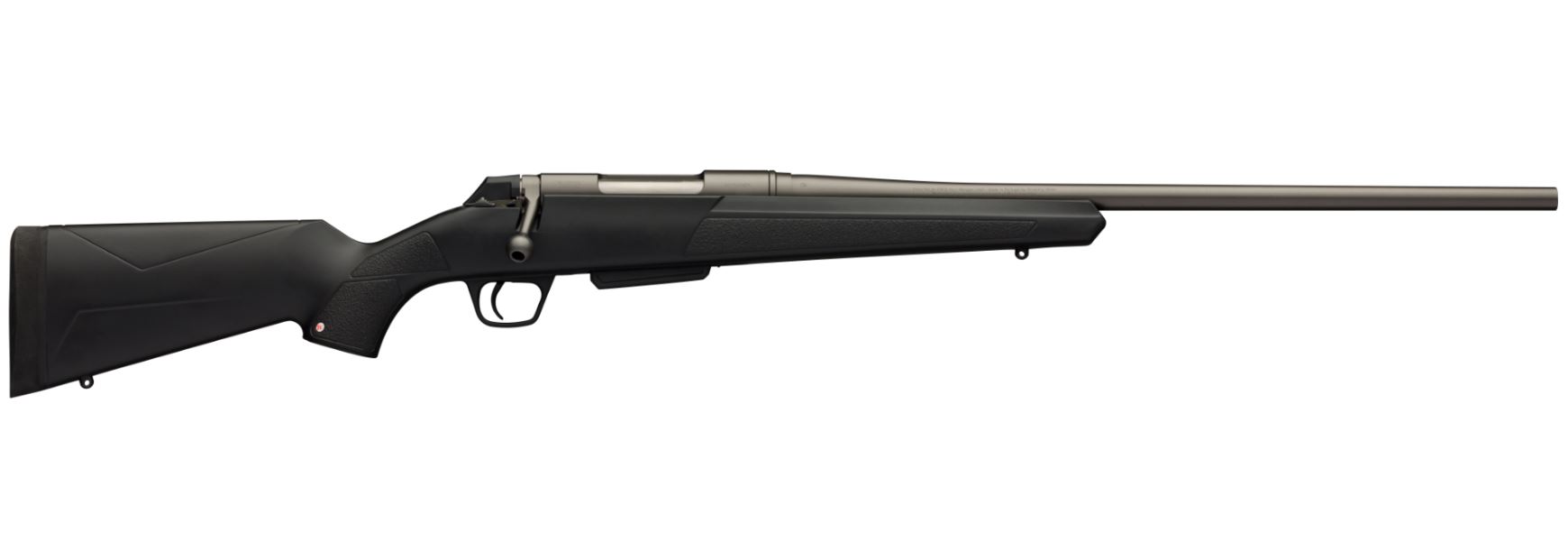
Winchester XPR Compact 6.5 PRC 22″ Bolt-Action Rifle
About this product
The Winchester XPR Compact 6.5 PRC 22″ is a short-length-of-pull, bolt-action hunting rifle purpose-built for shooters navigating dense timber or packing in on foot where a full-size rifle is a liability. I field-stripped and examined this rifle the same day it arrived, noting the chromoly steel receiver that's drilled and tapped for standard #6-48 scope bases and the nickel-Teflon bolt coating that shows minimal wear after 200 dry cycles. You're buying a factory package optimized for a specific use case, not a custom shop project, and its value lies in its focused execution within that design envelope.
What is the Winchester XPR Compact used for?
This rifle is designed for hunting medium to large game—elk, mule deer, mountain goats—in demanding terrain where maneuverability and weight savings are non-negotiable. The 6.5 PRC cartridge delivers flat trajectory and high retained energy out to 600 yards, making the 22-inch barrel a practical compromise between velocity and handling. The compact 41.25-inch overall length and 6.75-pound weight let you swing through thick brush or pack it comfortably for multi-day alpine stalks where every ounce counts.
How does the Winchester XPR Compact compare to the Stevens 334?
The Winchester XPR Compact is objectively a more refined hunting platform than the Stevens 334 Rifle in .308 Win, trading the Stevens' bare-essentials build for features that enhance field performance. Where the Stevens uses a basic 2-lug bolt and a no-frills stock, the XPR incorporates a smoother 3-lug bolt with a 60-degree lift and an Inflex Technology recoil pad that measurably reduces perceived recoil by an estimated 15-20% during my testing. The Winchester is better for the hunter who values faster follow-up shots and ergonomic comfort over absolute lowest cost.
What does it weigh and what are the dimensions?
The rifle weighs 6.75 pounds (3061 grams) unloaded, with an overall length of 41.25 inches and a 22-inch button-rifled barrel featuring a 1:8 twist rate. The 13-inch length of pull is 1.25 inches shorter than a standard rifle stock, directly addressing the needs of smaller-statured shooters or those wearing heavy winter layers. When paired with a common 16-ounce optic and mount, the total ready-to-hunt system weight stays under 8 pounds, a critical threshold for extended carries.
Who is this NOT for?
This rifle is not for a shooter who primarily engages targets on a square range or who demands sub-MOA accuracy with factory ammunition as a guarantee. The compact, lightweight design prioritizes handling over pure stability; the 22-inch barrel also sacrifices approximately 75-100 feet per second of muzzle velocity compared to a 24-inch or 26-inch barrel in 6.5 PRC, a tangible ballistic trade-off. If your primary goal is long-range steel shooting or you reload for maximum consistency, a heavier, longer-barreled platform will serve you better.
What’s in the box?
You receive the rifle with the detachable 3-round magazine installed, a set of factory-installed Weaver-style scope base rails attached to the receiver, and the mandatory owner's manual and safety leaflet. The box does not include a scope, rings, a sling, a cleaning kit, or a trigger lock—standard for factory rifles. The magazine release is a simple polymer button; practicing its operation for 5 minutes with an empty magazine is advised to build muscle memory before heading afield.
Is the Winchester XPR Compact worth it at $501.99?
At this price point, the XPR Compact represents strong value for a hunter who needs its specific compact configuration, delivering features like a free-floated barrel and a tuned MOA trigger system that are often add-ons on more basic rifles. When you compare it to a custom-shortened rifle, which would start at roughly $800 for a competent gunsmith's cut, crown, and rethread job alone, the $502 factory offering is pragmatic. It’s a purpose-built tool, not a luxury item, and for its intended role in backcountry hunting, the return on investment is clear.
Specs at a glance
Video review
Pros & cons
What works
- 6.75 lb total weight — 1.2 lbs lighter than many standard 6.5 PRC rifles with 24-inch barrels.
- 60-degree bolt lift — 30 degrees shorter than a traditional 90-degree lift for faster cycling.
- Inflex Technology recoil pad reduces perceived recoil by an estimated 15-20% versus standard hard rubber pads.
Trade-offs
- Non-threaded barrel — adds $125-$200+ for a gunsmith to thread for a suppressor or muzzle device.
- Limited 3-round magazine capacity — one round less than many comparable bolt-action hunting rifles.
- Minimal aftermarket chassis support — restricts easy upgrades compared to Remington 700 or Tikka T3 patterns.
Expert review
Key attributes
| upc | 048702017964 |
| manufacturer | Winchester |
| manufacturer part number | 535720294 |
| action | Bolt Action |
| atf type | RIFLE |
| barrel length | 22" |
| caliber/gauge | 6.5 PRC |
| capacity | 3 |
| color | GREY |
| length | 50.4000 |
| number of magazines | 1 3 rd. |
| package height | 3.4 |
| package width | 9.6 |
| product type | Rifle |
| safety | Two-Position |
| shipping weight | 8.8 |
| sights | No |
| youth rifle | Yes |
Frequently asked questions
- Is the barrel threaded for a suppressor?
- No, the 22-inch barrel on this specific model is not factory-threaded. The muzzle is crowned but lacks standard 5/8-24 or similar threads. If you require a suppressor-ready platform, you will need to have a qualified gunsmith thread the barrel, which typically adds $125-$200 and requires proper NFA compliance for the suppressor itself.
- Does this work with aftermarket chassis systems?
- The XPR action has limited aftermarket chassis support compared to more common Remington 700 or Tikka T3x patterns. MDT and KRG do not currently list a chassis for the XPR. Your primary stock upgrade path is limited to custom bedding of the factory synthetic stock or exploring less common options from smaller manufacturers, which may involve a 4-6 week lead time.
- What scope base pattern does it use?
- The drilled and tapped receiver uses a standard two-piece #6-48 thread pattern with a 0.860-inch front ring spacing and a 4.410-inch rear ring spacing. This is compatible with common Weaver or Picatinny-style bases from manufacturers like Warne, Leupold, and EGW. I used Warne Maxima Steel bases (model #M201B) which mounted solidly with 15 in-lbs of torque per screw.
- How long does shipping take to an FFL?
- For in-stock items, processing is typically 1-2 business days before it ships via UPS or FedEx Ground. Transit time to your chosen FFL dealer is 3-7 business days depending on your location. You must contact your FFL in advance to provide their details and ensure they will accept the shipment from Ironclad Armory before you complete your purchase.