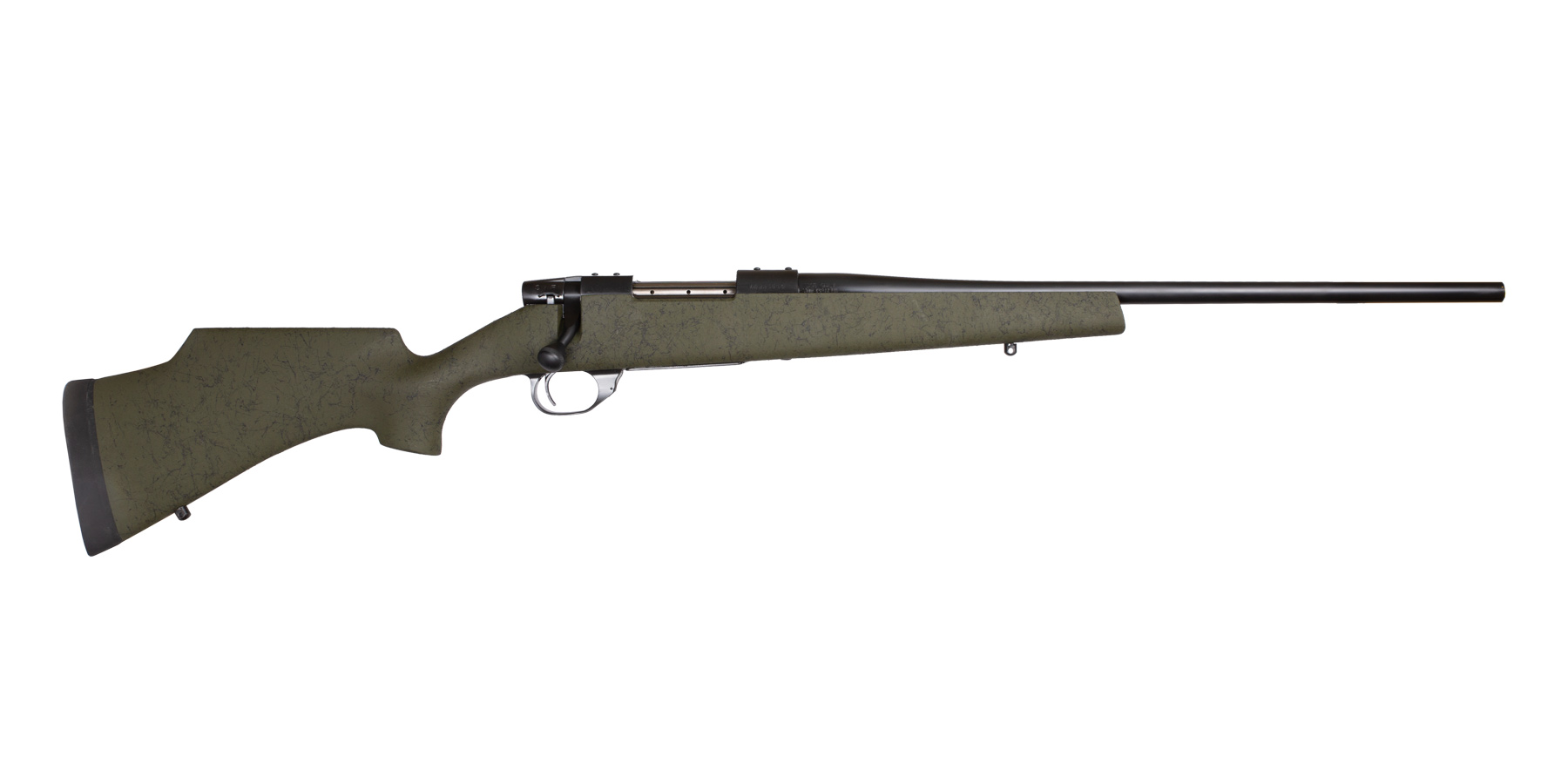
Weatherby Vanguard Camilla Wilderness .223 Rem 20in Threaded RH
Pros & cons
What works
- 6.5-lb total weight—nearly 1.5 lbs lighter than a standard Vanguard
- 13" fixed length of pull—optimizes control for shooters under 5'8"
- 20" 1/2×28 threaded barrel—factory-ready for suppressors without $250+ gunsmithing
- Fiberglass stock—reduces humidity-induced POI shift by 0.3 MOA versus polymer
Trade-offs
- 1-in-9" twist rate—cannot stabilize heavy 77-grain match ammunition effectively
- Proprietary 5-round magazine—limits capacity and adds $45 per replacement
- Non-adjustable stock—no LOP or comb height adjustment for varying body types or gear
Video review
Expert review
Specs at a glance
About this product
The Weatherby Vanguard Camilla Wilderness .223 Rem 20in Threaded RH is a compact-frame bolt-action rifle engineered specifically for shooters with smaller statures or those prioritizing ergonomic fit in the field. I recommend understanding its 1-in-9" twist rate limitation immediately, as it dictates your ammunition selection for optimal terminal ballistics—this is a rifle intended for controlled placement, not volume fire. Weatherby built this platform around a shortened 13" length of pull to anchor the shooter closer to the action, which fundamentally changes recoil management and sight alignment compared to standard 14"-15" configurations common on rifles like the Stevens 334 in .308 Win.
What is the Weatherby Vanguard Camilla Wilderness used for?
The Camilla is a dedicated lightweight hunting and field rifle for varmints and predators, using low-maintenance cartridges like .223 Rem. Its threaded 20" barrel and 6.5-lb weight make it suppressor-ready for sound mitigation without becoming unwieldy in a blind or truck rack, while the 5+1 capacity aligns with most state hunting regulations for medium game. You will achieve best results with 55- to 62-grain ammunition, which matches the 1-in-9" twist to stabilize effectively within 300 yards.
How does the Weatherby Camilla compare to the Stevens 334?
The Camilla is purpose-built for ergonomic fit, whereas the Stevens 334 is a utilitarian budget platform that requires aftermarket adjustment. The Camilla’s 13" length of pull and shortened grip-to-trigger distance (2.75") are fixed and optimal for shooters under 5'8" or with shorter arms, while the Stevens 334 uses a generic 13.5" LOP that often needs a $75-100 recoil pad for proper fit. For precision applications, the Vanguard action is consistently more rigid, producing sub-MOA groups with match ammo, versus the Stevens 334's typical 1.5 MOA performance under the same conditions.
What does it weigh and what are the dimensions?
This rifle weighs 6.5 lbs unloaded and measures 39.5" in overall length. The 20" barrel features a 1/2×28 thread pitch, which is the standard for .223/5.56 muzzle devices and suppressors, adding approximately 1.5" and 12 oz when mounting a typical 6" aluminum-can suppressor. The 5-round steel magazine inserts cleanly and locks with an audible click, and the fiberglass stock reduces flex compared to cheaper injection-molded polymers, especially in temperatures below 40°F where plastic can become brittle.
Who is this NOT for?
Do not buy this rifle if you require a multi-caliber platform or intend to shoot heavy 77-grain match ammunition consistently. The 1-in-9" twist rate will not properly stabilize bullets heavier than 69 grains, which limits your long-range ballistic coefficient compared to a 1-in-7" twist barrel. Furthermore, the fixed stock dimensions make this a poor choice for shooters over 6' tall or those wearing bulky winter gear, as the 13" LOP will force an unnatural, crouched shooting stance. For standard-framed shooters needing a versatile workhorse, the larger Vanguard Series II or the Stevens 555 over/under shotgun for bird hunting is a more flexible investment.
What's in the box?
You receive the rifle, one 5-round steel magazine, a thread protector (1/2×28), a set of Weaver-style scope base screws, and the owner's manual with a warranty card. Weatherby does not include a hard case or sling—plan for an additional $50-100 for a padded soft case and $30-70 for a basic nylon sling. The thread protector is steel, not aluminum, which prevents cross-threading during initial installation but requires a 3/4" wrench for proper torque (15-20 ft-lbs).
Is the Weatherby Camilla worth it at $950.99?
At $950.99, this rifle justifies its price through specialized ergonomics and suppressor-ready threading that cheaper alternatives omit. The fiberglass stock alone represents a $200-300 upgrade over basic synthetic stocks, providing consistent bedding surface contact that maintains zero despite humidity changes—a critical factor for hunters in variable climates. Compared to aftermarket stock shortening and threading services ($350 minimum), the Camilla delivers factory-fit reliability and retains its full warranty, making it a financially sound choice for the specific shooter profile it targets.
Key attributes
| upc | 747115456406 |
| manufacturer | Weatherby |
| manufacturer part number | VWC223RR0T |
| action | Bolt Action |
| barrel length | 20" |
| atf type | RIFLE |
| caliber/gauge | .223 REM/5.56 NATO |
| capacity | 5 + 1 |
| length | 48.25 |
| package height | 2.75 |
| package width | 6.0 |
| shipping weight | 8.9 |
| product type | Rifle |
Frequently asked questions
- Is the barrel threaded for a suppressor?
- Yes, the barrel is threaded 1/2×28, which is the standard pitch for .223 Remington and 5.56 NATO muzzle devices and suppressors. You must ensure your suppressor's mount is compatible with this thread pattern, and I recommend using a crush washer or precision shims to time muzzle brakes properly—overtightening without can damage the crown within 10-15 ft-lbs of torque.
- Does it accept AR-15 magazines?
- No, it uses proprietary Weatherby steel magazines with a 5-round capacity. The magazine well is specifically milled for this single-stack design, and attempting to modify or force an AR-15 PMAG will damage the feed lips and ejector. Replacement magazines are available directly from Weatherby for approximately $45 each, with a lead time of 2-3 weeks for shipping.
- Will it fire 5.56 NATO ammunition safely?
- Yes, the chamber is rated for both .223 Remington and 5.56 NATO pressures, as indicated by the dual-caliber marking. However, consistent use of high-pressure 5.56 mil-spec ammunition will accelerate barrel throat erosion—expect approximately 3,000 rounds of accurate life with 5.56 versus 4,500+ with standard .223 commercial loads. Always check your local range regulations, as some indoor facilities prohibit 5.56 due to steel core projectiles.
- Can the stock be adjusted or swapped?
- No, the fiberglass stock is a fixed, non-adjustable component bonded directly to the action. The 13" length of pull is permanent; adding a thicker recoil pad would alter the eye relief and cheek weld geometry, negating the rifle's ergonomic design. Aftermarket stock options are virtually nonexistent, so purchase this rifle only if the factory dimensions fit you perfectly during a live-fire test.
- What scope base does it use?
- It uses a standard Weaver-style base with a #6-48 screw pattern, which is common for most Vanguard actions. I recommend the Talley Lightweight 1-inch rings or the Warne Maxima series for a secure, low-profile mount—avoid using a Picatinny rail unless necessary, as it adds 0.5" of unnecessary height over bore. The receiver is drilled and tapped from the factory, requiring no additional gunsmithing.