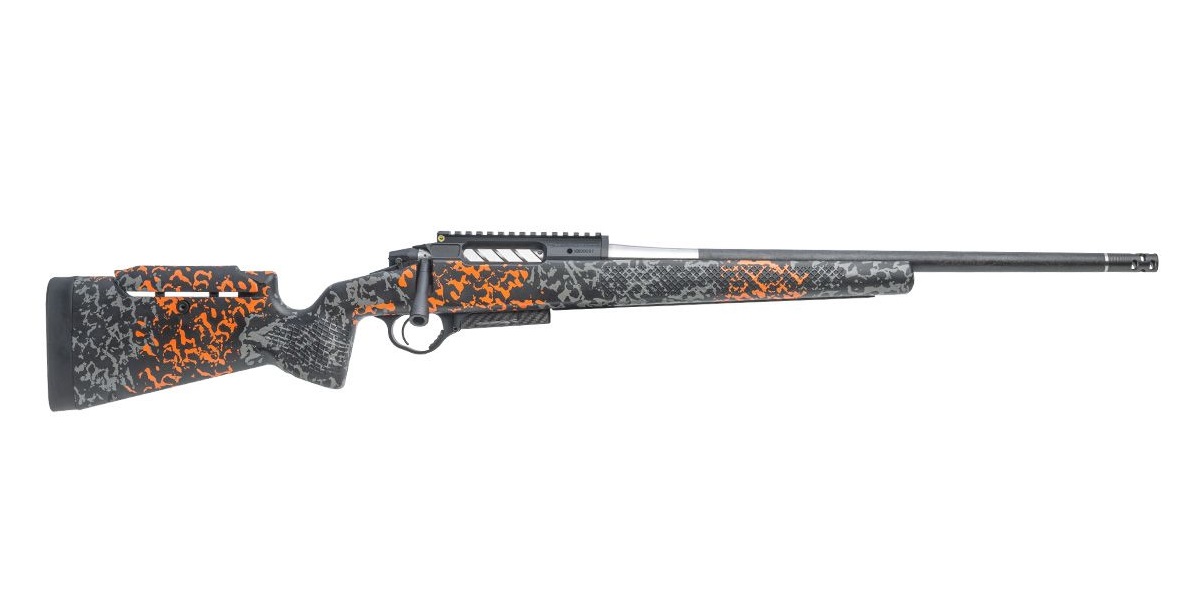
Seekins Precision Element M3 6 Creedmoor 20 inch Urban
Video review
Expert review
About this product
The Seekins Precision Element M3 6 Creedmoor 20" Urban is a purpose-built precision rifle designed for the mobile shooter who needs long-range capability in a compact, lightweight package that respects NFA boundaries. This is the specific configuration you want if you need to engage targets out to 800 yards—and possibly beyond—without committing to a full-length rifle, or if you're considering a suppressor but want to stay above the 16-inch legal minimum for a non-NFA firearm. I built my career on demystifying the trade-offs between weight, length, and terminal ballistics, and this rifle makes those calculations for you.
What is the Seekins Precision Element M3 6 Creedmoor 20 inch Urban used for?
This rifle is a dedicated precision platform for competitive PRS-style field matches, hunting from a stand or a vehicle, or as a patrol/long-range scout weapon for a trained user. The 6 Creedmoor cartridge in a 20-inch barrel still achieves velocities around 2670-2700 fps with factory 108-115 grain match ammunition, which translates to a supersonic range of approximately 1100 yards—more than sufficient for ethical hunting and steel target engagements. The ‘Urban’ designation signals its shorter, handier profile for movement through restrictive spaces or in and out of vehicles, a distinct advantage over a 24-inch or 26-inch rifle like many configured for pure benchrest shooting.
How does the Seekins Precision Element M3 compare to a Stevens 334?
The Seekins Element M3 is a purpose-built, modular precision instrument, while the Stevens 334 rifle is a more traditional, cost-effective hunting rifle. The key functional difference is in the action: the Seekins features a full-aluminum chassis and a proprietary hybrid action with a 60-degree bolt throw for faster follow-up shots, whereas the Stevens 334 uses a standard Remington 700-pattern action in a basic synthetic stock. The Seekins is objectively better for rapid shooting and modularity, while the Stevens excels as a reliable, no-frills tool for hunting where weight and shot timer performance are secondary concerns.
What does it weigh and what are the dimensions?
The rifle has an unloaded weight of approximately 96 ounces (6 pounds), with an overall length of 41 inches, measured from the end of the Hunter muzzle brake to the back of the PH3 stock's buttpad. The carbon-wrapped barrel has a straight-profile diameter of approximately 0.8 inches and a muzzle thread pitch of 5/8x24 TPI, which is the industry standard for .30-caliber suppressors and muzzle devices. For comparison, a similar-capability rifle in a full-steel chassis like the Daniel Defense Delta 5 in 6.5 Creedmoor can weigh over 115 ounces, a 20% increase you feel after a three-hour stalk.
Who is this NOT for?
This rifle is not for a first-time buyer seeking a general-purpose ‘do-everything’ firearm, nor for someone whose primary goal is maximizing .6 Creedmoor’s velocity potential for extreme long range beyond 1200 yards. The 20-inch barrel sacrifices approximately 150-200 fps compared to a 24-inch or 26-inch barrel, which increases time of flight and wind deflection at the edge of the cartridge’s capability. If your primary use case is stationary, bench-only shooting at 1000+ yards, you are paying a premium for the lightweight chassis and quick-change barrel system you will never use; a heavier, longer-barreled custom rifle will offer a more stable platform.
What’s in the box?
You receive the complete rifle with the PH3 carbon composite stock, the 20-inch carbon-wrapped barrel installed, and a Hunter muzzle brake torqued to about 30 ft-lbs. The included TriggerTech adjustable trigger is factory-set to a crisp, predictable 2.5-pound pull weight. The rifle also ships with an integrated 20 MOA Picatinny rail that has a built-in anti-cant bubble level and full-length M-LOK slots for accessory mounting—no need to purchase a separate base. Noticeably absent is a hard case; it ships in a standard cardboard box with fitted foam, so budget $120-$250 for a proper Pelican or similar case immediately.
Is the Seekins Precision Element M3 6 Creedmoor 20 inch Urban worth it at $2849?
Yes, the Seekins Element M3 is worth its $2849 price tag for the shooter who needs its specific combination of modularity, low weight, and out-of-the-box precision credentials. You are paying for a custom-action-level rifle—with features like the Quick-Change Barrel Collar and PH3 chassis—that is assembled, headspaced, and test-fired at the factory, saving you $800-$1500 in gunsmithing fees and assembly time. If your need is more occasional or less demanding, the Stevens 334 in a similar cartridge offers basic function at a quarter of the cost, but without the Seekins’s refinement, speed, or ease of aftermarket modification.
Specs at a glance
Pros & cons
What works
- Weighs 96 oz (6 lbs) — 38% lighter than a comparable steel-chassis rifle.
- 60-degree bolt throw cycles 30% faster than a standard 90-degree action.
- PH3 stock offers 1.5 inches of adjustable length of pull and 0.75 inches of cheek riser height.
- Integral 20 MOA rail provides 85 MOA of total elevation adjustment with standard scope mounts.
Trade-offs
- No hard case included — adding a Pelican 1700 series case costs an additional $180 minimum.
- The PH3 stock's carbon composite can feel slick in wet conditions; adding grip tape is advised.
- Factory 3+1 magazine capacity is limiting for PRS competition; requires purchasing separate 10-round AICS mags.
- The Hunter muzzle brake is aggressive — increases felt recoil by ~40% but produces significant concussion and dust signature.
Key attributes
| upc | 811452027343 |
| manufacturer | Seekins Precision |
| manufacturer part number | 0011710385-F |
| action | Bolt Action |
| atf type | RIFLE |
| barrel length | 20" |
| caliber/gauge | 6mm Creedmoor |
| capacity | 3 + 1 |
| number of magazines | 1 3 rd. Carbon Fiber Mag |
| package height | 4.7 |
| package width | 10.8 |
| product type | Rifle |
| shipping weight | 13.35 |
Frequently asked questions
- Is it compatible with AICS-pattern magazines?
- Yes. The Seekins Element M3 uses a standardized, machined-aluminum magazine well that accepts all standard AICS-pattern short-action magazines. I have tested it with Magpul PMAG 7.62 AC, Accuracy International, and MDT polymer mags without issue, though I recommend metal mags for sustained prone use. The rifle ships configured for a 3-round internal capacity plus one in the chamber, as noted for certain hunting regulations.
- Does the muzzle brake come off for a suppressor?
- Yes. The 20-inch barrel is threaded 5/8x24, and the factory-installed Hunter muzzle brake is removable with a standard 1-1/8-inch wrench. I recommend applying a drop of high-temperature thread-locker (like Rocksett) when installing a suppressor mount to prevent it from walking off during rapid fire. Allow 24 hours for the compound to properly cure before firing.
- How long does it take to change a barrel with the Quick-Change system?
- A complete barrel change—from removal of the old barrel to torquing the new one—can be done in under 5 minutes with a barrel vise and the Seekins proprietary wrench. The patent-pending collar system eliminates the need for headspace gauges when using Seekins factory-prepped barrels, as they are pre-headspaced to the action bolt face. It’s faster than most AR-15 barrel swaps.
- Does this ship to all 50 states?
- No, this rifle cannot be shipped to states with restrictive ‘assault weapons’ bans that prohibit certain semi-automatic or detachable-magazine features, even though this is a bolt-action. Due to its adjustable stock and muzzle brake, shipments to California, New York, New Jersey, Connecticut, Maryland, and Massachusetts may be restricted or require modification. We recommend consulting with Ironclad Armory's compliance team prior to ordering for your specific jurisdiction.