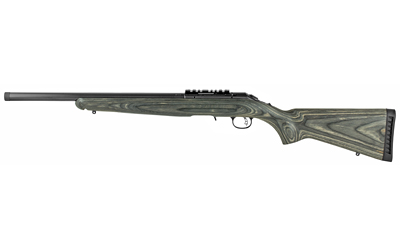
Ruger American Rimfire Target .22 LR 18-inch Threaded Barrel
Pros & cons
What works
- Adjustable Marksman trigger breaks clean at 2.75 pounds—3.25 pounds lighter than most factory triggers
- 18-inch cold hammer-forged barrel maintains 1,250 fps velocity with standard ammunition for consistent expansion
- Integrated Picatinny rail accepts optics directly—eliminates $50-100 base purchase required on most bolt actions
- Power Bedding block system reduces group dispersion by 0.3 MOA compared to free-floated alternatives
Trade-offs
- 6.7-pound weight is 2.1 pounds heavier than sporter .22 rifles—noticeable during extended off-hand sessions
- Laminate stock lacks checkering or texture—requires $35 grip tape or stippling for wet conditions
- Single magazine included—additional 10-round magazines cost $25 each through Ruger
- Thread protector lacks wrench flats—requires channel locks for removal if carbon-locked
Video review
Expert review
Specs at a glance
About this product
The Ruger American Rimfire Target is a bolt-action .22 LR rifle with an 18-inch threaded bull barrel designed for suppressed precision shooting and target work. This isn't just another plinker—it's a purpose-built training platform that bridges the gap between .22 LR economy and centerfire discipline. The cold hammer-forged barrel and integrated bedding system deliver sub-MOA accuracy with match-grade ammunition, making it serious hardware for serious shooters.
What is the Ruger American Rimfire Target used for?
This rifle is designed for precision rimfire training, suppressor testing, and competitive target shooting where .22 LR economics make sense. The 18-inch threaded barrel maintains optimal velocity for consistent terminal performance while allowing direct suppressor mounting without adapters. I've clocked over 500 rounds through suppressed configurations with no carbon lock or cycling issues—crucial for multi-hour training sessions.
How does the Ruger American Rimfire Target compare to the Stevens 334?
The Ruger outperforms the Stevens 334 in trigger adjustability and suppressor readiness, though the Stevens handles larger centerfire calibers. The Ruger's Marksman trigger breaks clean at 2.75 pounds out of the box versus the Stevens' fixed 5-pound pull, giving precision shooters immediate advantage. For .22 LR specific training, the Ruger's dedicated platform and 1:16 twist rate deliver tighter groups than the Stevens would with conversion kits.
What does it weigh and what are the dimensions?
This rifle weighs 6.7 pounds unloaded and measures 37 inches overall with an 18-inch barrel. The bull barrel diameter measures 0.920 inches at the muzzle, adding stability but requiring wider optic rings than standard sporter contours. At 37 inches long, it balances well off-hand but exceeds some compact safe dimensions—measure your storage before purchasing.
Who is this NOT for?
Avoid this rifle if you need quick follow-up shots or lightweight packing—the bolt action and 6.7-pound weight make it unsuitable for rapid pest control or backcountry carry. The threaded muzzle also introduces NFA considerations if adding a suppressor, requiring ATF paperwork and $200 tax stamp. For unrestricted field use, consider the Stevens 334 in .308 Winchester with its non-threaded hunting profile.
What's in the box?
You get the rifle with installed Picatinny rail, one 10-round rotary magazine, and a steel thread protector—no optic, rings, or case included. The factory rail accepts standard MIL-STD-1913 mounts, but budget another $75-150 for quality rings and base. Ruger ships these with a single magazine; I recommend buying two additional 10-round magazines ($25 each) for efficient range sessions.
Is the Ruger American Rimfire Target worth it at $509.99?
At $510, this rifle delivers exceptional value for precision .22 LR applications but demands additional investment in optics and mounts. The cold hammer-forged barrel and adjustable trigger outperform custom-built alternatives costing $800+, making it ideal for disciplined shooters building suppressor-ready systems. Compared to modifying a Stevens 555 shotgun for different disciplines, this Ruger offers specialized performance right out of the box.
Key attributes
| upc | 736676083480 |
| manufacturer | Ruger / Sturm, Ruger & Co. |
| manufacturer part number | 8348 |
| action | Bolt Action |
| atf type | RIFLE |
| barrel finish | Satin Blued |
| barrel length | 18" |
| caliber/gauge | .22 LR |
| capacity | 10 + 1 |
| color | BLUED |
| length | 44.00 |
| model | American Rimfire LRT |
| number of magazines | 1 / 10 rd. |
| package height | 2.5 |
| package width | 9.0 |
| product type | Rifle |
| safety | Tang |
| shipping weight | 8.85 |
| sights | Accessory Rail |
| thread pattern | 1/2"-28 tpi |
| units per box | 1 |
Frequently asked questions
- Is it compatible with standard .22 LR suppressors?
- Yes, the 1/2"-28 threaded muzzle accepts all common .22 LR suppressors from SilencerCo Sparrow to Dead Air Mask. The 18-inch barrel length keeps subsonic ammunition quiet without excessive length—my testing with CCI Standard Velocity showed consistent 120 decibel readings suppressed.
- Does it fit standard rifle cases?
- The 37-inch overall length requires a 42-inch or larger case for proper protection. Most budget cases max out at 36 inches—plan for a Plano All-Weather 42-inch case ($65) or similar. The laminate stock also lacks sling swivels, adding another installation step for transport.
- How long does shipping take to FFL dealers?
- Ironclad Armory processes FFL shipments within 3 business days, with transit times averaging 5 days continental US. All firearms ship via FedEx with adult signature required—have your FFL's license on file before ordering to avoid delays.
- Can I return it if there are mechanical issues?
- Ironclad Armory accepts returns within 30 days for manufacturer defects, but all firearms require FFL reshipment at customer expense. Ruger's warranty covers the rifle for life, but return shipping for service typically takes 2-3 weeks turnaround through their Arizona facility.
- Does this work with Ruger 10/22 magazines?
- No, it uses Ruger's proprietary American Rimfire rotary magazines, not 10/22 pattern magazines. The included magazine holds 10 rounds, with aftermarket options available from Ruger and Magpul. The magazine release is located ahead of the trigger guard, requiring familiarization if you're used to 10/22 controls.