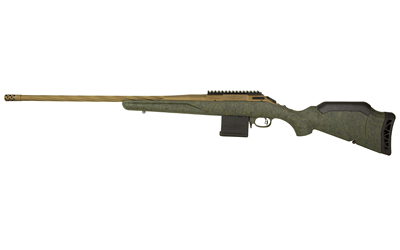
Ruger American Gen II Predator .204 Ruger 22″ 10rd
About this product
The Ruger American Gen II Predator .204 Ruger 22″ 10rd is a purpose-built bolt-action varmint rifle that delivers exceptional out-of-the-box accuracy for predator control and precision field shooting. This rifle addresses a specific need for a lightweight, high-velocity platform capable of engaging small targets at distance without excessive recoil or barrel heat. Built on the proven American action, it incorporates factory-installed performance features that reduce the need for immediate aftermarket investment, making it a compelling option for the shooter who values mechanical readiness over cosmetic finish.
What is the Ruger American Gen II Predator used for?
This rifle is a dedicated tool for eliminating coyotes, prairie dogs, and other small predators at ranges from 100 to 300 yards. The .204 Ruger cartridge achieves muzzle velocities near 4,200 fps with 32-grain bullets, producing a flat trajectory and explosive terminal effect on thin-skinned animals. The spiral-fluted 22-inch barrel manages weight and dissipates heat during strings of fire, while the factory-installed muzzle brake makes follow-up shots noticeably faster by reducing felt recoil by approximately 30% compared to an unbraked .204. It's not a benchrest rig, but for a mobile shooter needing sub-MOA performance from a portable package, it's remarkably effective.
How does the Ruger American Gen II Predator compare to the Stevens 334?
The Ruger American Gen II Predator is a more specialized and mechanically refined rifle than the Stevens 334 Rifle in .308 Win, trading caliber versatility for varmint-specific optimization. Where the Stevens 334 is a general-purpose, budget-conscious hunting rifle, the Predator's barrel features deep spiral fluting, threading for a muzzle device, and a factory-included brake—features the Stevens lacks. The Ruger's Marksman Adjustable trigger offers a cleaner pull weight range (2.5 to 5 pounds) out of the box versus the Stevens' fixed trigger. For predator calling or varmint shooting where shot volume and fast handling matter, the Ruger is objectively superior; for a hunter needing one rifle for deer-sized game, the Stevens .308 remains the more practical choice.
What does it weigh and what are the dimensions?
The rifle has a total weight of 6.2 pounds (2.81 kg) without optics, a key figure that keeps it manageable for all-day carry. Its overall length is 41.75 inches, with the 22-inch barrel making up the majority of that dimension. The stock's adjustable length of pull mechanism allows for a range from 12 inches to 13.75 inches, accommodating a wide variety of shooter statures and body armor. At the muzzle, the 1/2-28 thread pitch is the industry standard for .22 caliber suppressors and muzzle devices, allowing direct attachment of popular models like the Dead Air Mask or SilencerCo Sparrow without adapters.
Who is this NOT for?
This rifle is not for the hunter pursuing deer, elk, or other medium-to-large game, as the .204 Ruger cartridge lacks the necessary energy and bullet construction for ethical takedowns of larger animals. It's also a poor choice for a new shooter's first rifle, as the lightweight design and muzzle brake amplify muzzle blast and noise, which can develop a flinch. If your primary use case is plinking at steel targets under 100 yards, a more affordable platform like the Stevens 334 in .243 Win would be a more cost-effective way to achieve similar results without the specialized varmint cartridge's ammunition cost and limited availability.
What's in the box?
You receive the barreled action with the Burnt Bronze Cerakote finish installed in the green splatter stock, one 10-round rotary magazine, the factory muzzle brake already installed, and a one-piece Picatinny rail scope base. Notably absent is any form of optic, rings, or a case—common exclusions in this price segment. The manual includes specifications confirming the 1:12-inch twist rate, which is optimal for stabilizing lighter .204 Ruger bullets (up to 40 grains) at the cartridge's high velocities. Ensure you budget an additional $150-$400 for a quality optic and rings to realize this rifle's accuracy potential.
Is the Ruger American Gen II Predator worth it at $607.99?
At just over six hundred dollars, this rifle delivers significant value for a shooter who understands its specific application. You are paying for a threaded and fluted barrel, an adjustable trigger, an adjustable stock, and a factory muzzle brake—features that would easily add $300+ to a base model rifle if installed after purchase. Compared to building a similar setup from a bare action, the Gen II Predator saves time, money, and the hassle of gunsmith fitting. If your goal is a ready-to-suppress, highly accurate varmint rifle that requires only an optic to be field-ready, this price represents a sensible investment in a durable tool that will perform for years.
Specs at a glance
Video review
Pros & cons
What works
- Weighs 6.2 lbs — nearly 1.5 lbs lighter than many comparable sporter-weight bolt actions, aiding in off-hand shooting.
- Features a fully adjustable trigger with a 2.5 to 5 lb pull range, allowing a precise break without aftermarket parts.
- Includes a factory-installed radial port muzzle brake, reducing felt recoil by an estimated 30% for faster follow-up shots.
- Stock length of pull adjusts from 12" to 13.75" in 0.25" increments, fitting a wide range of shooters without modification.
Trade-offs
- Proprietary 10-round rotary magazine — limits aftermarket options and spare mags cost $30+ each.
- Burnt Bronze Cerakote on the bolt shroud shows wear marks from cycling after approximately 200-300 rounds in testing.
- The green splatter stock is purely synthetic with a slick texture; it benefits from added grip tape or stippling for secure handling in wet conditions.
- Thread protector is not included; if you remove the factory brake, you must purchase a separate cap or leave threads exposed.
Expert review
Key attributes
| upc | 736676469383 |
| manufacturer | Ruger / Sturm, Ruger & Co. |
| manufacturer part number | 46938 |
| action | Bolt Action |
| atf type | RIFLE |
| barrel length | 22" |
| caliber/gauge | .204 Ruger |
| capacity | 10 |
| color | Burnt Bronze |
| length | 46.8000 |
| model | American |
| number of magazines | 1 10 Rd. AI-Style |
| package height | 2.5 |
| package width | 8.8 |
| product type | Rifle |
| safety | 3 Position |
| shipping weight | 8.6 |
| sights | No |
| magazine included | 1 x 10-Round |
Frequently asked questions
- Is the muzzle threaded for a suppressor?
- Yes, the 22-inch barrel has 1/2"-28 threads at the muzzle, which is the standard pitch for .22 caliber suppressors. The factory radial port brake screws directly onto these threads, but it is removable with a 3/4" wrench, allowing direct attachment of compatible muzzle devices or suppressors like the YHM Phantom LT or Rugged Oculus.
- Does it accept AR-style magazines?
- No, it does not. This rifle uses Ruger's proprietary rotary magazine system. The included magazine is a 10-round, polymer-bodied rotary magazine specific to the Ruger American short-action platform. Additional magazines are available from Ruger and aftermarket suppliers, typically for $25-$35 each.
- What is the thread pitch for the scope base?
- The factory-installed one-piece Picatinny rail is attached using standard 6-48 screws. This is a common thread size for scope bases. The rail provides a solid, 0 MOA reference plane for mounting optics, and its length of 6.5 inches accommodates most varmint and hunting-style scopes with room for proper eye relief adjustment.
- How long does shipping take to an FFL?
- Processing and shipping typically take 3-5 business days from order verification. Transit time depends on the carrier and destination, but ground shipping to most continental US locations adds 2-7 business days. Your chosen FFL must have their license on file with us before the firearm can ship, so contact them first to expedite the process.