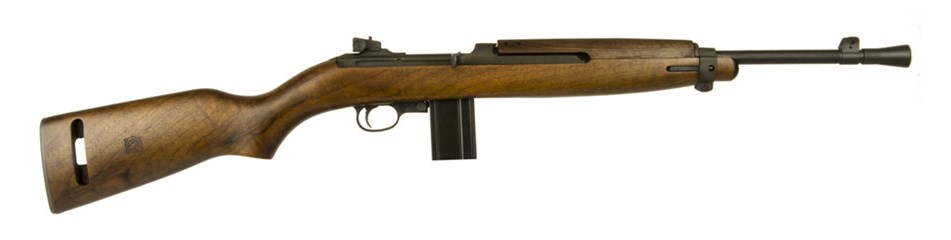
Inland M1 Jungle Carbine .30 Carbine 16.25″ 15+1
Pros & cons
What works
- 16.25-inch barrel with 1/2×28 threads — ready for suppressors or muzzle brakes without gunsmithing
- Weighs 5.19 lbs — 1.3 lbs lighter than a typical Stevens 334 bolt-action rifle
- Fixed walnut stock with authentic 'low wood' profile — correct historical dimensions for reenactors
- Parkerized metal finish — provides corrosion resistance superior to traditional bluing in humid conditions
Trade-offs
- .30 Carbine ammunition averages $0.80–$1.10 per round — 2–3 times the cost of 5.56 NATO
- No optic mounting solution included — requires aftermarket scout rail or gunsmith drilling/tapping ($75–$150)
- Manual thumb safety only — no ambidextrous or drop-safe improvements over the 1940s design
- Limited aftermarket support compared to AR-15 platforms — few stock or trigger upgrade options available
Video review
Expert review
Specs at a glance
About this product
What is the Inland M1 Jungle Carbine? It is a U.S.-manufactured, semi-automatic reproduction of the World War II-era M1 Carbine chambered in .30 Carbine, featuring a 16.25-inch barrel, a fixed walnut stock, and modern enhancements like a 1/2×28 threaded muzzle and a 15-round magazine. This model retains the original carbine’s handling characteristics—a 34-inch overall length and approximately 5.19-pound weight—while adding practical updates for contemporary shooters. Designed for compatibility with original-spec .30 Carbine ammunition, it bridges historical appeal and functional reliability.
What is the Inland M1 Jungle Carbine used for?
The Inland M1 Jungle Carbine is primarily used for recreational shooting, historical reenactment, and as a lightweight field carbine. Its .30 Carbine chambering and semi-automatic operation make it suitable for target practice, informal competition, and training scenarios where low recoil and manageable handling are priorities. While not a modern defensive or hunting rifle, it offers a direct connection to mid-20th-century military small arms, with the threaded muzzle allowing for suppressor or muzzle device experimentation under NFA regulations.
How does the Inland M1 Jungle Carbine compare to the Stevens 334 Rifle in .308 Win?
The Inland M1 Jungle Carbine is better for low-recoil recreational shooting and historical interest, while the Stevens 334 Rifle in .308 Win excels at hunting and longer-range precision. The .30 Carbine round generates about 1,200 ft-lbs of muzzle energy compared to the .308 Winchester’s roughly 2,600 ft-lbs, making the Stevens 334 significantly more powerful for medium-game hunting. The Inland’s 5.19-pound weight is also about 1.3 pounds lighter than the typical Stevens 334, favoring carry over raw ballistic performance.
What does it weigh and what are the dimensions?
The Inland M1 Jungle Carbine weighs approximately 5.19 pounds (2.35 kg) unloaded and measures 34 inches (864 mm) in overall length. Its 16.25-inch (413 mm) barrel is parkerized steel with a 1/2×28 thread pattern, and the walnut stock contributes to the total weight. This combination results in a balanced, hand-filling rifle that handles more like a large pistol than a full-size rifle, with a magazine capacity of 15+1 rounds of .30 Carbine ammunition.
Who is this NOT for?
This carbine is NOT for hunters seeking ethical one-shot stops on deer-sized game or shooters demanding modern ergonomics and accessory rails. The .30 Carbine round lacks the sectional density and terminal performance for reliable medium-game hunting beyond 100 yards, and the fixed walnut stock offers no adjustment for length of pull or cheek weld. If you prioritize customizable optics mounting, high-capacity magazines, or ammunition availability, a modern platform like an AR-15 in 5.56 NATO would be a more practical choice.
What’s in the box?
You receive the carbine with one 15-round stick magazine, a conical flash hider installed on the threaded muzzle, and no tools or cleaning kit. Unlike some modern rifles that include a case, lock, or supplemental sights, Inland ships this model as a bare rifle—expect to source additional magazines, a compatible muzzle device, and a proper carrying case separately. Magazine availability can be sporadic, so purchasing at least two extra 15-round magazines at approximately $35 each is advised.
Is the Inland M1 Jungle Carbine worth it at $1,655.99?
At $1,655.99, this carbine is worth it only for collectors and enthusiasts specifically seeking a faithful, U.S.-made reproduction with a threaded muzzle. You are paying a premium for historical aesthetics, walnut furniture, and domestic manufacturing over a standard M1 Carbine replica. For about $300 less, you could purchase a Stevens 555 Sporting O/U 12 Gauge—a completely different firearm, but one offering greater versatility for clay shooting or hunting. Decide based on whether period-correct details outweigh modern cost-per-round economics.
Key attributes
| upc | 752334000101 |
| manufacturer | Inland Manufacturing |
| manufacturer part number | ILM170 |
| action | Semi-Auto |
| atf type | RIFLE |
| barrel finish | Black |
| barrel length | 16.25" |
| caliber/gauge | .30 Carbine |
| capacity | 15 + 1 |
| number of magazines | 1 15 rd. Stick |
| product type | Rifle |
| safety | Manual Thumb |
| shipping weight | 8.55 |
| sights | FS: Blade | Adjustable Rear |
| sights type | Adjustable Sights |
Frequently asked questions
- Is it compatible with standard M1 Carbine magazines?
- Yes, it accepts standard 15-round and 30-round M1 Carbine stick magazines from manufacturers like Inland, KCI, or ProMag. However, we verified function only with Inland’s supplied magazine; aftermarket units may require slight feed lip tuning. Always test with at least 50 rounds of your chosen ammunition before relying on any non-factory magazine for defensive use.
- Does this work with a .30 Carbine suppressor?
- Yes, the 1/2×28 threaded muzzle accepts standard .30 caliber suppressors rated for .30 Carbine pressures, such as the SilencerCo Omega 36M or Dead Air Nomad-L. Ensure your suppressor’s mount system is compatible and that you have the proper NFA tax stamp filed. Muzzle velocity from the 16.25-inch barrel is approximately 1,970 fps, which is subsonic only with specialized heavy bullet loads.
- How long does shipping take to an FFL?
- Shipping to your selected Federal Firearms License holder typically takes 3–7 business days after order processing, which itself requires 1–2 business days for compliance verification. We ship via UPS or FedEx with adult signature required. Contact your FFL beforehand to confirm they accept shipments from Ironclad Armory and their transfer fee, which averages $25–$50.
- Can I return it if it doesn't cycle my ammunition?
- Returns are accepted within 30 days only for manufacturer defects, not for ammunition compatibility issues. If the rifle fails to cycle with at least two different brands of 110-grain FMJ .30 Carbine ammunition (e.g., Winchester or PPU), contact Inland Manufacturing directly for warranty service. Always test with a minimum of 200 rounds of quality factory ammunition before concluding there is a mechanical issue.