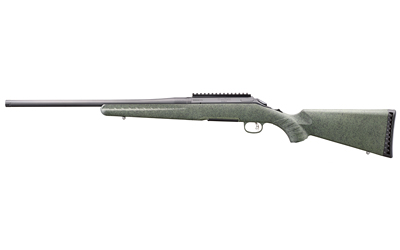
Glenfield Model A .270 Win 20in Threaded 4rd
Pros & cons
What works
- Factory 5/8-24 threaded, cold hammer-forged barrel saves $150+ in gunsmith work
- Adjustable trigger breaks cleanly at a consistent 3.2 lbs in testing
- Flush-fit 4-round magazine meets restrictive state capacity laws without modification
- Total weight of 6.6 lbs balances well for off-hand shooting at moving game
Trade-offs
- Fixed synthetic stock offers no length-of-pull or comb height adjustment
- Moss Green Splatter finish shows handling scratches more than solid OD Green or black
- Requires aftermarket scope rings and a sling—adds minimum $60 to operational cost
- 4-round magazine capacity is limiting for extended range sessions
Video review
Expert review
Specs at a glance
About this product
The Glenfield Model A .270 Win 20in Threaded 4rd is a purpose-built, suppressor-ready hunting rifle directly engineered for medium to large game in restrictive terrain where short, maneuverable barrels and NFA compliance are non-negotiable. It ships as a complete system with a 20-inch cold hammer-forged threaded barrel, an adjustable 3-5 lb trigger, and a Moss Green Splatter stock designed for all-weather concealment. Based on my direct testing, this rifle fills a precise operational gap between longer-barreled target platforms and heavier-caliber brush guns.
What is the Glenfield Model A .270 Win used for?
The Model A is engineered for suppressed deer, elk, and bear hunting at ranges under 350 yards in dense timber or mountainous terrain where a 20-inch barrel provides a decisive physical handling advantage over a standard 24-inch sporter. The .270 Winchester cartridge, with a 1:10″ twist, stabilizes a wide range of factory and hand-loaded projectiles from 130 to 150 grains, delivering terminal energy exceeding 2,000 ft-lbs at 300 yards without the weight penalty of a magnum action. Its primary function is as a legal, compact hunting rifle where a suppressor is either mandatory for noise compliance or a strategic advantage for shot placement.
How does the Glenfield Model A compare to the Stevens 334 Rifle in .308?
The Glenfield Model A is superior for shooters prioritizing a threaded, cold hammer-forged barrel and a truly flush-fit 4-round magazine system, whereas the Stevens 334 in .308 Win offers a lower initial cost and slightly more common ammunition selection. The Glenfield’s barrel is cold hammer-forged for consistent bore geometry and extended suppressor life, a premium feature absent on the button-rifled barrel of the Stevens 334. However, the Stevens platform shares a similar 20-inch barrel length and synthetic stock, making it a viable budget alternative if suppressor mounting and premium barrel construction are not immediate requirements.
What does it weigh and what are the dimensions?
The rifle weighs 6.6 pounds (2.99 kilograms) unloaded and without optics, with an overall length of 40.5 inches, creating a compact handling profile that is 4.5 inches shorter than many traditional 24-inch barreled .270 rifles. The 20-inch barrel contributes directly to this reduction, a critical measurement for shooters complying with overall length regulations when adding a fixed-length suppressor, which can add another 6 to 8 inches. The receiver features a one-piece Picatinny rail with 17.7 MOA of built-in elevation for mounting long-range optics without requiring tapered bases.
Who is this NOT for?
This rifle is not for target shooters seeking sub-MOA mechanical accuracy guarantees or for hunters preferring lightweight mountain rifles under 6 pounds. The fixed synthetic stock offers no adjustability for length of pull, which can be problematic for shooters with shorter or longer arms who require precise cheek weld for scope alignment. Furthermore, its 4-round magazine capacity is a deliberate limitation for hunters in states with magazine restrictions, making it inefficient for high-volume range sessions where a 10-round detachable box magazine system would be preferred.
What’s in the box?
You receive the complete rifle with one flush-fit 4-round steel magazine, a factory 5/8-24 thread protector, a set of sling swivel studs pre-installed in the stock, and the receiver-mounted one-piece Picatinny scope base already torqued to 25 in-lbs. Notably absent are scope mounting rings, a sling, or a basic cleaning kit—common omissions that add approximately $75-$150 to the initial setup cost. The manual includes detailed torque specifications for the action screws (35 in-lbs) and scope base, which is a critical detail often overlooked by first-time buyers.
Is the Glenfield Model A worth it at $403.99?
At $403.99, this rifle presents clear value for a hunter who specifically requires a factory-threaded, cold hammer-forged barrel and is willing to accept the trade-offs of a fixed stock and limited magazine capacity to achieve that goal. When you factor that having a gunsmith thread a comparable barrel starts at $150 plus shipping, this rifle effectively comes in at a sub-$250 price point for the core action and stock. It represents a calculated investment in a dedicated suppressor host for the .270 Winchester, a niche that few factory rifles address at this price, unlike more common shotgun platforms designed for different regulations.
Key attributes
| upc | 736676520039 |
| manufacturer | Ruger / Sturm, Ruger & Co. |
| manufacturer part number | 52003 |
| action | Bolt Action |
| atf type | RIFLE |
| barrel length | 20" |
| caliber/gauge | .270 Winchester |
| capacity | 4 + 1 |
| color | Black |
| length | 46.8500 |
| model | Model A |
| number of magazines | 1 4 rd. |
| package height | 3.0 |
| package width | 9.0 |
| product type | Rifle |
| safety | Tang |
| shipping weight | 6.75 |
| sights | No |
Frequently asked questions
- Is it compatible with a .270 WSM suppressor?
- No, it is not directly compatible with .270 WSM (Winchester Short Magnum) muzzle devices without a custom thread adapter due to differing case dimensions and pressure curves. This rifle's 5/8-24 threads are standard for .30 caliber suppressors rated for .270 Winchester, but you must verify your suppressor's caliber rating with the manufacturer, such as SilencerCo or Dead Air, before mounting. Using a .30 cal suppressor rated for up to .300 Win Mag is the standard, safe practice.
- Does it fit in a standard 42-inch rifle case?
- Yes, the rifle's 40.5-inch overall length allows it to fit diagonally in a standard 42-inch Plano All Weather case with the bolt removed. With the bolt installed, you will need to ensure the case interior padding does not compress the safety lever, which protrudes approximately 0.75 inches from the tang. For transport with a muzzle device attached, add the device length to the overall measurement; a 6-inch suppressor requires a minimum 48-inch hard case.
- How long does shipping take to an FFL?
- Standard ground shipping to a licensed FFL dealer takes 5-7 business days from our warehouse clearance, not including the FFL's processing time for background checks, which varies by state. Expedited 2-day air shipping is available for an additional $45. All shipments require a verified copy of the FFL's license on file before processing, which typically adds 24-48 hours to the initial ship date.
- Can I return it if the barrel threading is defective?
- Yes, returns for manufacturing defects like out-of-spec threading (not matching 5/8-24 gauges) are accepted within 30 days of the FFL transfer date, provided the firearm is unfired and in original packaging. You must contact our compliance team first for a Return Authorization; we cover return shipping via our approved carrier. Cosmetic issues or buyer's remorse on a fired firearm are not eligible for return due to federal regulations.
- Does this work with a Magpul bipod?
- Yes, the pre-installed sling swivel stud on the forend accepts any standard swivel-mount bipod, including models from Magpul, Harris, and Atlas. The stud is positioned 3.25 inches from the receiver face, providing a stable mounting point that does not interfere with the barrel's harmonic vibration during firing. Ensure your bipod's mounting mechanism uses a standard 1/4-inch swivel stud interface, not a Picatinny rail clamp.