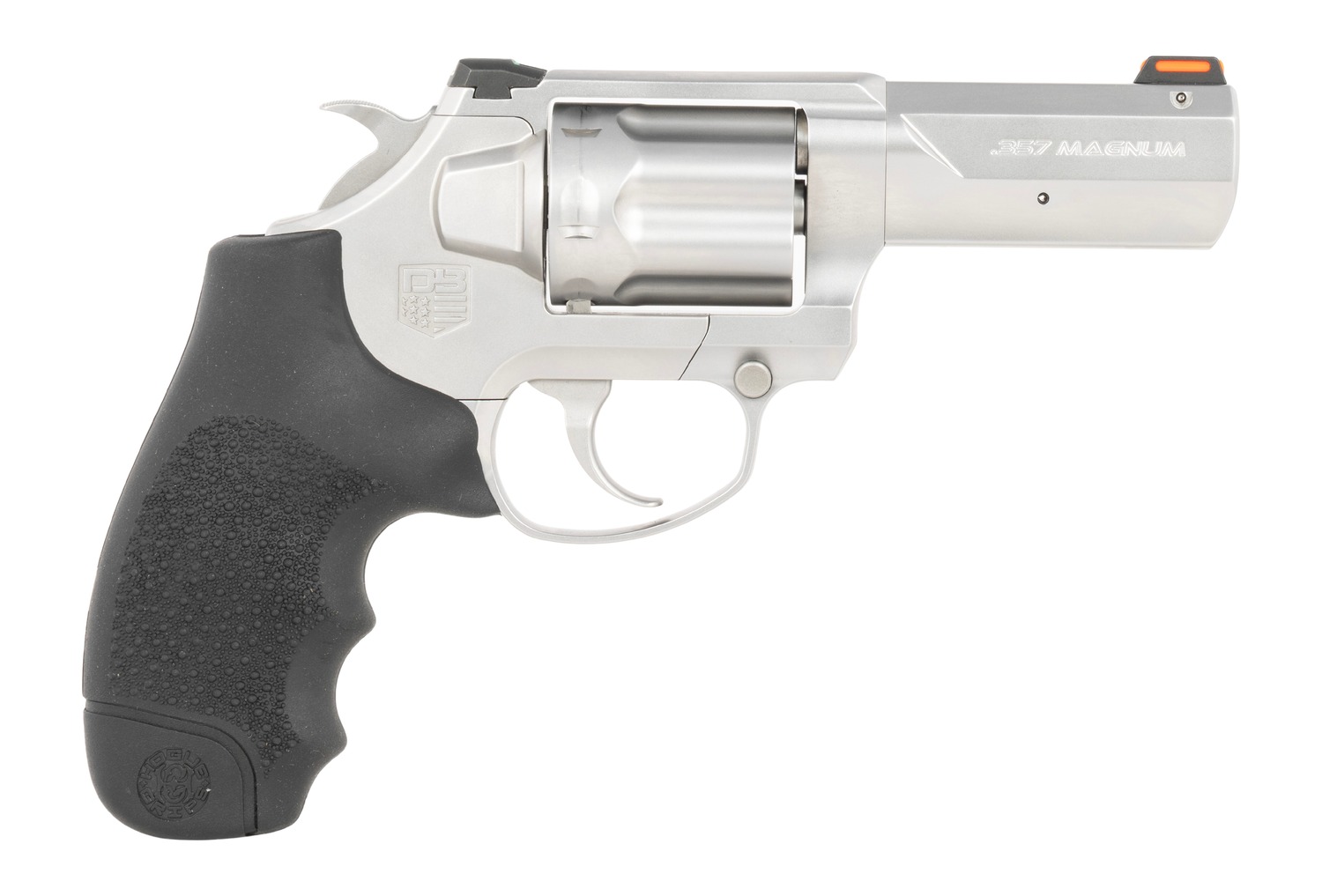
Diamondback SDR Revolver 3″ 6-Round Stainless
Video review
Expert review
About this product
The Diamondback SDR is a compact, stainless-steel double-action/single-action revolver designed for reliable everyday carry. It delivers a 3-inch barrel and 6-round capacity in a snag-resistant frame that prioritizes mechanical certainty over tactical frills. As someone who has dealt with more regulatory paperwork than trigger pulls, I value tools where the engineering meets the letter of the law without complication.
What is the Diamondback SDR used for?
The Diamondback SDR is primarily a concealed carry and close-quarters defensive revolver. Its 3-inch barrel offers a sight radius of 5.1 inches—sufficient for realistic defensive training distances inside 15 yards—while remaining manageable in an IWB holster. The glass-bead finish on the stainless-steel frame provides excellent corrosion resistance against daily sweat, and the Hogue grip mitigates recoil from standard-pressure .38 Special loads, which average around 1,200 ft-lbs of energy.
How does the Diamondback SDR compare to a Ruger LCR?
The Diamondback SDR is mechanically simpler and heavier than a polymer-framed Ruger LCR. Where the Ruger LCR in .38 Special weighs approximately 13.5 ounces, the all-stainless SDR weighs 23.8 ounces, giving it a more stable, deliberate feel during double-action trigger pulls that measure roughly 12 pounds. The SDR's exposed hammer allows for deliberate single-action fire, a feature omitted on most concealed-hammer LCR models, making the SDR better for shooters who value that traditional option and the solidity of metal.
What does it weigh and what are the dimensions?
The Diamondback SDR weighs 1.49 pounds (23.8 ounces) unloaded. Its overall length is 7.71 inches, height is 4.9 inches, and the cylinder width is 1.44 inches. The 3-inch barrel provides a sight radius of 5.1 inches, which is a full inch longer than many 2-inch snub-nose revolvers, aiding practical accuracy. The dimensions make it a viable carry option, though it is notably denser than polymer-frame alternatives like the Stevens 334 bolt-action rifle, which is a tool for a completely different mission.
Who is this NOT for?
This revolver is not for the shooter prioritizing absolute minimum weight or modern, high-capacity platforms. At 23.8 ounces, it is substantially heavier than polymer-frame revolvers and micro-compact semi-autos. The non-threaded barrel also means it cannot accept a suppressor without permanent modification—a non-starter for users in NFA-regulated suppressor use. If your primary concern is capacity over six rounds, you are looking at the wrong tool.
What's in the box?
The box contains the revolver, one 6-round stainless-steel cylinder, a single Hogue rubber monogrip, and a basic cable lock. There is typically no spare grip, speed loader, or cleaning kit included. Expect the packaging and documentation to be functional, not premium—this is a working tool, not a presentation piece.
Is the Diamondback SDR worth it at $687.99?
At $687.99, the Diamondback SDR is worth it if you specifically value the durability and simplicity of an all-stainless, traditional DA/SA revolver for carry. Compared to a Smith & Wesson Model 642 Airweight at a similar price point, you trade polymer-frame lightness for stainless-steel heft and an exposed hammer. This price positions it above budget-tier revolvers but below custom shop models, making it a solid, no-nonsense middle-ground for a dedicated carry tool that will outlast its owner with basic maintenance.
Specs at a glance
Pros & cons
What works
- All-stainless construction weighs 23.8 oz — provides a stable, dampened shooting platform compared to polymer frames.
- 3-inch barrel offers a 5.1-inch sight radius — 1 inch longer than common 2-inch snubbies for better practical accuracy.
- Exposed hammer enables single-action fire — a feature missing on many dedicated concealed-carry revolvers like the Ruger LCR.
Trade-offs
- Non-threaded barrel — cannot accept a suppressor without a $120+ gunsmithing job and potential NFA registration.
- Heavier than modern alternatives — at 23.8 oz, it's over 10 oz heavier than a polymer-frame Ruger LCR, affecting all-day carry comfort.
- Limited aftermarket support — holster and grip options are specific and less common than for S&W or Ruger models.
Key attributes
| upc | 810035756670 |
| manufacturer | Diamondback Firearms |
| manufacturer part number | DB0700S713 |
| action | Double / Single Action |
| barrel finish | Glass Bead |
| barrel length | 3" |
| caliber/gauge | .38 Special |
| capacity | 6 |
| color | Silver |
| length | 4.44'' |
| model | SDR |
| product type | Double / Single Action |
| shipping weight | 2.2 |
| sights | Fixed FO Front/Dovetail FO Rear |
Frequently asked questions
- Is the muzzle compatible with a thread adapter for a suppressor?
- No, the muzzle is non-threaded from the factory. Adding threads would require a gunsmith to permanently alter and re-crown the barrel, a process costing approximately $120-$200 and requiring Form 1 registration if shortening the barrel to create threads.
- Does it fit standard S&W K-frame holsters?
- No, it does not. The Diamondback SDR has its own unique frame dimensions. You will need a holster specifically molded for the Diamondback SDR model. Most major Kydex makers like Vedder Holsters or DeSantis list compatible models.
- How long does shipping take to an FFL?
- Shipping typically takes 3-5 business days to your designated Federal Firearms License holder after order processing, which itself takes 1 business day. All shipments require an adult signature upon delivery at the FFL.
- Can I return it if it doesn't fit my hand?
- No, firearms sales are final for fit. You can return it only if it has a verifiable manufacturing defect. We strongly recommend handling a similar model at a local dealer first; the Hogue grip is the only factory option, and aftermarket choices for this specific frame are limited.
- Does this work with .38 Special +P ammunition?
- Yes, the stainless-steel frame is rated for standard .38 Special +P pressures. However, prolonged use of +P will accelerate wear on the forcing cone and other components. For sustained practice, I recommend standard pressure rounds and reserving +P for carry.