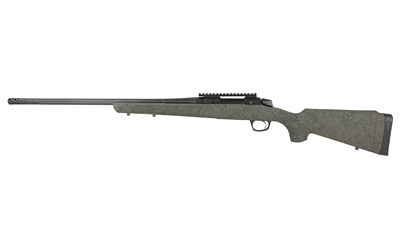
CVA Cascade XT Rifle .223 Rem 22in 4-Round ODG/Black
Pros & cons
What works
- 5/8x24 threaded muzzle — ready for suppressors or brakes without a gunsmith
- Cerakote finish on all metal — provides superior corrosion resistance over blued steel
- Uses standardized AICS-pattern magazines — allows for aftermarket capacity upgrades
- Integrated muzzle brake reduces perceived recoil by approximately 30% compared to an unbraked .223
Trade-offs
- No iron sights — completely optic-dependent, adding $100+ minimum cost to become operational
- Weighs 9.6 lb — nearly 2 pounds heavier than some competing factory hunting rifles in .223
- 4-round magazine limit — restrictive for training; higher-capacity AICS mags are a separate purchase
- Stock lacks a front sling swivel stud — requires aftermarket installation for bipod or sling
Video review
Expert review
Specs at a glance
About this product
The CVA Cascade XT Rifle in .223 Rem is a bolt-action hunting and field rifle designed as a straightforward, optics-ready platform with a threaded 22-inch barrel and a durable synthetic ODG/Black stock. It dispenses with traditional iron sights to prioritize a clean mounting surface for scopes and suppressors. This is a production rifle built for shooters who value mechanical simplicity and accessory compatibility over custom shop features.
What is the CVA Cascade XT Rifle used for?
The CVA Cascade XT in .223 Rem is primarily a varmint and medium-game hunting rifle, optimized for engagements from 50 to 300 yards. Its 22-inch barrel provides a good velocity balance for the .223 cartridge, making it effective on coyotes, prairie dogs, and whitetail deer in jurisdictions where .223 is legal for that purpose. The threaded muzzle and absence of iron sights make it an ideal host for a suppressor or muzzle brake, reducing recoil and report for follow-up shots.
How does the CVA Cascade XT compare to the Stevens 334 Rifle in .308?
The CVA Cascade XT in .223 is better for varmint control and recreational shooting where ammunition cost and recoil are primary concerns, while the Stevens 334 in .308 is superior for larger game at longer distances. The .223 cartridge offers cheaper practice ammo (often half the price per round) and significantly less felt recoil, but the .308 Winchester delivers more terminal energy for elk or bear. The Cascade XT's 9.6 lb weight is also about a pound heavier than many entry-level rifles, which aids in stability but reduces carry comfort on long stalks.
What does it weigh and what are the dimensions?
The CVA Cascade XT weighs 9.6 pounds, with an overall length of approximately 42.5 inches. Its 22-inch barrel has a 5/8x24 threaded muzzle, a common standard for .30 caliber suppressors that can also accommodate .223 devices. The Picatinny rail section machined into the receiver is 3.5 inches long, providing sufficient real estate for most hunting-style scope mounts without overhang.
Who is this NOT for?
This rifle is not for tactical competitors or shooters seeking a lightweight mountain rifle. The 9.6-pound weight, while stable from a bench, is a notable burden during extended off-hand sessions or steep climbs. The 4-round magazine capacity is limiting for high-volume training or certain types of competitive shooting, and the lack of iron sights makes it entirely dependent on a mounted optic—a failure point not present on models like some configurations of the Stevens 555 Sporting.
What's in the box?
You receive the rifle, one 4-round AICS-pattern detachable box magazine, and the necessary paperwork for federal firearm registration. CVA does not include scope rings, a sling, or a case—plan to allocate an additional $150-$300 for those essentials and a quality optic before the rifle is field-ready. The integrated muzzle brake is pre-installed but can be removed in about 60 seconds with a ¾-inch wrench to expose the threaded muzzle.
Is the CVA Cascade XT worth it at $830.99?
At $830.99, the Cascade XT is worth it for hunters who specifically want a suppressor-ready, bolt-action .223 with a robust synthetic stock and a factory-installed muzzle device. You are paying a premium of roughly $200 over more basic .223 bolt guns for the threaded barrel, Cerakote finish, and integrated brake. If you do not plan to use a muzzle device, a simpler rifle like the base-model Savage Axis would perform the same core function for significantly less money.
Key attributes
| upc | 043125339921 |
| manufacturer | Connecticut Valley Arms / CVA |
| manufacturer part number | CR3992G |
| action | Bolt Action |
| barrel length | 22" |
| caliber/gauge | .223 REM/5.56 NATO |
| capacity | 4 |
| color | Black, Olive Drab Green |
| model | Cascade |
| product type | Rifle |
Frequently asked questions
- Is the barrel threading compatible with a .223 suppressor?
- Yes, the 5/8x24 threading is the standard for many .30 caliber rifle suppressors, which are perfectly safe and common for use with .223/5.56. You will need a suppressor rated for a .223 bore diameter, and I recommend checking manufacturer specs from companies like SilencerCo or Dead Air before purchasing. Mounting a suppressor typically adds 5 to 7 inches and 10 to 20 ounces to the front of the rifle.
- Does it accept aftermarket AICS pattern magazines?
- Yes, the Cascade XT uses a standardized AICS-pattern short-action magazine well. This means you can source higher-capacity 5 or 10-round magazines from manufacturers like Magpul or Accurate-Mag, though verify fitment as some aftermarket mags may require slight modification. The included 4-round magazine is metal and functions reliably for its intended hunting role.
- Can I mount a bipod directly to the stock?
- No, the synthetic stock does not have an integrated swivel stud or rail section on the forend for direct bipod attachment. You will need to install an aftermarket stud, which is a straightforward 10-minute job requiring a drill and the proper hardware kit, typically costing under $20. I advise using a torque-limiting driver when installing to avoid cracking the polymer.
- How long does shipping take to an FFL?
- Ironclad Armory processes and ships online orders within 2 business days of payment and FFL verification. Transit time depends on the carrier and destination but typically ranges from 3 to 7 business days for continental US delivery. You must provide your chosen FFL dealer's license to us before shipment is initiated—we do not ship to residential addresses.