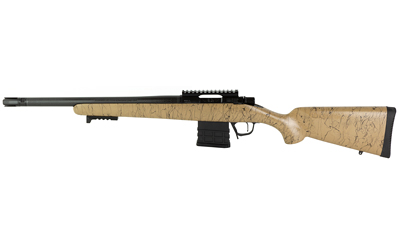
Christensen Arms Ridgeline Scout .308 Win 16in Tan/Black
Video review
Expert review
About this product
What is the Christensen Arms Ridgeline Scout .308 Win 16in Tan/Black? It is a compact, lightweight, and field-optimized bolt-action rifle that uses advanced materials to deliver precision in a 37.5-inch overall package, specifically designed for shooters who need a maneuverable, suppressor-ready platform. This rifle represents the intersection of modern carbon-fiber technology and practical NFA-adjacent configurations, moving beyond traditional long-range precision tools toward a more adaptable class of firearm. It targets the segment of the market that values mobility and accessory compatibility, especially with the growing popularity of short-barreled rifles and suppressors.
What is the Christensen Arms Ridgeline Scout used for?
The Ridgeline Scout is built specifically for close-to-mid-range marksmanship and dynamic field use. It's a purpose-built tool for moving through thick cover, operating from vehicles, or as a dedicated suppressor host where its 16-inch barrel paired sub-6-pound weight makes it exceptionally handy. The scout configuration, with its mid-length optic rail, lends itself to low-magnification optics or prism sights for rapid target acquisition at distances from 50 to 400 yards, making it ideal for hunting in dense timber, certain types of competitive shooting, or as a versatile patrol/hiking rifle.
How does the Ridgeline Scout compare to the Stevens 334 Rifle?
Compared directly to the Stevens 334 Rifle, the Ridgeline Scout is a lighter, more specialized, and significantly more expensive precision instrument. The Christensen rifle weighs 5.9 lbs versus the Stevens' 6.6 lbs and uses a proprietary carbon-wrapped barrel that aids in cooling and reduces weight, where the Stevens uses a traditional chromoly steel barrel. The Scout is better at delivering sub-MOA accuracy with high-end ammunition and handling suppressor backpressure due to its threaded, precision-machined muzzle; the Stevens 334 is better as a cost-effective, durable, and reliable tool for general-purpose hunting and recreational shooting.
What does it weigh and what are the dimensions?
The rifle weighs precisely 5.90 lbs (94.4 ounces) and measures 37.50 inches in overall length. The 16-inch barrel has a 1:10 twist rate and a 5/8x24 thread pattern, finished with a removable three-prong flash hider that adds 1.5 inches to the total length when installed. The carbon-fiber sporter stock contributes significantly to the low weight, and the compact dimensions allow it to be stored in a 38-inch rifle case, making it a practical choice for aircraft or vehicle transport where space is at a premium.
Who is this NOT for?
This rifle is not for long-range benchrest shooters, budget-first buyers, or those seeking a traditional wood-and-steel aesthetic. The 16-inch barrel in .308 Winchester sacrifices some muzzle velocity compared to a 20 or 22-inch barrel, which can impact energy downrange and increase felt recoil, making it less optimal for traditional long-distance hunting beyond 500 yards. Additionally, its $1999.99 price point puts it in a different league than entry-level offerings; if your primary need is a basic, reliable .308 for occasional use, a platform like the Stevens 334 in .243 Win may represent a better value.
What's in the box?
The rifle is shipped with one AICS-compatible 5-round steel magazine, the removable three-prong flash hider installed on the threaded barrel (torqued to 25 ft-lbs from the factory), the 0-MOA Picatinny optic rail, and a basic owner's manual covering warranty and safety information. It does not include scope mounting hardware, a sling, a suppressor, or a cleaning kit. The rifle is ready for an optic to be mounted directly to the integrated rail, which is secured with four 8-32 screws. Expect to spend an additional $150-$500 on mounting hardware, optics, and a suitable case.
Is the Ridgeline Scout worth it at $1999.99?
Yes, but only for the shooter who explicitly needs its blend of lightweight construction, compact form factor, and precision-grade components. You are paying a premium for the Christensen Arms carbon-fiber barrel technology, the TriggerTech trigger, and the high-quality nitride finish on the action, all of which contribute to its out-of-the-box accuracy potential and durability. If your use case involves significant carry time, quick handling, or regular use with a suppressor, the investment is justified. If you are a casual shooter who fires fewer than 100 rounds per year, the added performance may not offset the substantial cost difference compared to more basic bolt actions.
Specs at a glance
Pros & cons
What works
- Weighs only 5.9 lbs — nearly a full pound lighter than many 20-inch .308 bolt actions.
- 16-inch carbon-wrapped barrel reduces weight and improves heat dissipation compared to solid steel.
- Includes a premium TriggerTech trigger with a flat shoe, typically a $250+ aftermarket upgrade.
- 5/8x24 threaded muzzle is ready for a suppressor without requiring gunsmithing.
Trade-offs
- No iron sights included — requires an optic purchase and mounting, adding at least $200 to the total cost.
- The carbon fiber stock lacks texture in the grip area — may require stippling or tape for secure handling in wet conditions.
- High price point ($1999.99) places it well above entry-level alternatives like the Stevens 334.
- Limited to AICS-pattern magazines, which cost $40-$60 each versus cheaper proprietary options.
Key attributes
| upc | 691328238055 |
| manufacturer | Christensen Arms |
| manufacturer part number | 801-06120-00 |
| action | Bolt Action |
| atf type | RIFLE |
| barrel length | 16" |
| caliber/gauge | .308 / 7.62 NATO |
| capacity | 10 + 1 |
| color | Black |
| length | 41.5 |
| model | Ridgeline Scout |
| number of magazines | 1 10 rd. |
| package height | 4.0 |
| package width | 9.5 |
| product type | Rifle |
| shipping weight | 8.7 |
Frequently asked questions
- Is the threaded barrel compatible with my .308 suppressor?
- Yes, if your suppressor has a standard 5/8x24 thread pitch and is rated for .308 Winchester/7.62 NATO pressures. The factory three-prong flash hider is removable with a 3/4-inch wrench. Always verify your suppressor's manufacturer specifications for minimum barrel length; most require 16 inches for .308, which this rifle meets exactly.
- Does it fit in a standard rifle case?
- It will fit in any hard or soft case with an internal length of 38 inches or more. Given its 37.5-inch overall length, a 40-inch case provides ideal clearance for added muzzle protection, especially if you leave the flash hider installed. Most universal scoped rifle cases in the 42-inch size category will accommodate it easily.
- How long does shipping and FFL processing take?
- Ironclad Armory processes in-stock items within 2 business days. Shipping via our contracted carriers typically takes 3-5 business days to your selected Federal Firearms License (FFL) holder. The FFL's background check and transfer process is independent and varies by state, but plan for a total of 7-10 business days from order to pickup.
- Can I mount a bipod directly to the stock?
- No, the carbon-fiber sporter stock does not have an integrated swivel stud or Picatinny rail section for a bipod. You will need to install an aftermarket stud, which requires careful drilling to avoid damaging the composite material, or use a clamp-on bipod adapter that attaches to the sling swivel stud located at the forend. We recommend the Impact Weapons Components M-LOK to Picatinny adapter if you add a forend rail section.