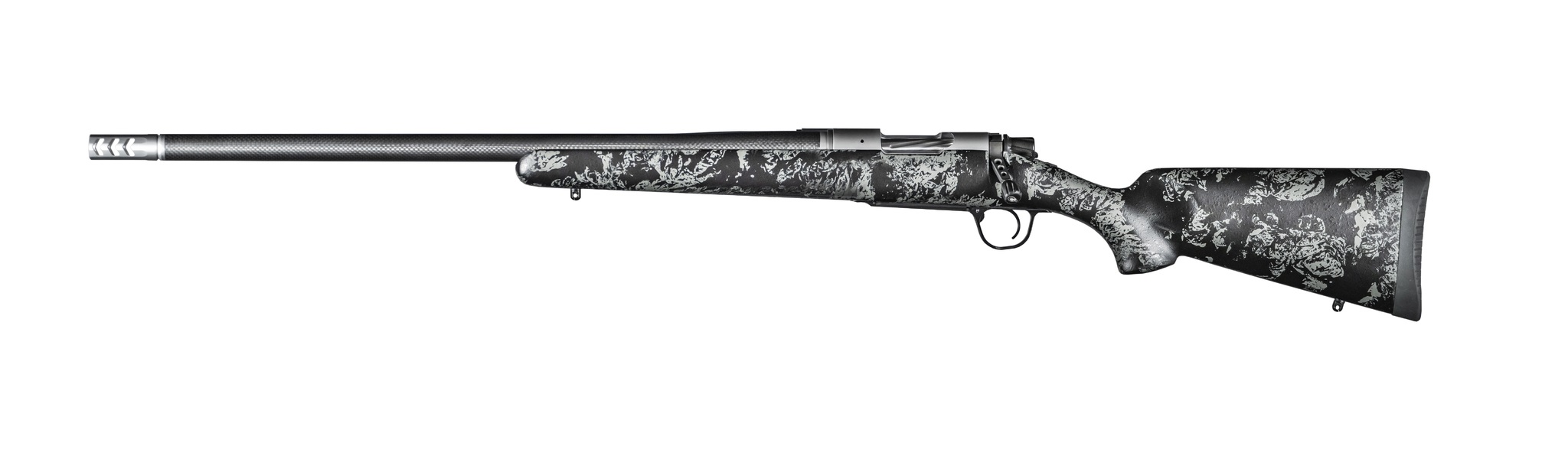
Christensen Arms Ridgeline FFT 6.5mm Creedmoor 20″ LH Rifle
About this product
What is the Christensen Arms Ridgeline FFT 6.5mm Creedmoor 20″ LH Rifle? It is a left-hand-threaded, bolt-action precision rifle built around a carbon-wrapped stainless barrel, engineered to deliver sub-MOA accuracy while minimizing carry weight. This configuration targets shooters who understand that muzzle threading direction matters for suppressor compatibility and who prioritize a platform that balances rigidity with field-portability. The 6.5 Creedmoor chambering and 1:8 twist rate are optimized for modern, high-BC projectiles.
What is the Christensen Arms Ridgeline FFT used for?
This rifle is built for precision long-range shooting and backcountry hunts where ounces matter. The 20-inch carbon-wrapped barrel saves approximately 1.5 pounds compared to a traditional stainless steel contour of the same length, directly translating to less fatigue during extended stalks. Its left-hand 5/8x24 muzzle threads allow direct attachment of a suppressor without an adapter, a critical feature for those operating under NFA rules. This is not a plinking or close-quarters rifle; it's a purpose-built instrument for first-shot confidence at distance.
How does the Christensen Arms Ridgeline FFT compare to the Stevens 334?
The Ridgeline FFT is a specialized precision tool, while the Stevens 334 is a durable, value-oriented workhorse. The Christensen rifle's 8.0-pound weight is 1.2 pounds lighter than the Stevens 334 in .308 Win, and its carbon-wrapped barrel provides superior heat dissipation and rigidity for sustained fire. You're paying nearly three times the price for the Christensen, but that buys you the sub-MOA guarantee, advanced material science, and the left-hand thread pattern that the Stevens line lacks. The Stevens is better for a budget-conscious shooter needing a reliable general-purpose rifle; the Christensen is better for the shooter whose primary metric is repeatable, measured accuracy.
What does it weigh and what are the dimensions?
The rifle weighs 8.0 pounds unloaded, and its overall length is 40.5 inches from buttpad to muzzle threads. The magazine well accepts AICS-pattern magazines, providing a 4+1 round capacity with the included steel mag. The barrel's external diameter at the muzzle is 0.750 inches, which is the standard for most 5/8x24 thread protectors and muzzle brakes. With a typical scope and rings mounted, expect the total package weight to sit between 9.5 and 10.5 pounds, depending on optic choice.
Who is this NOT for?
This rifle is not for the casual plinker or the shooter on a strict budget. At $1999.99, it represents a serious investment in materials and tolerances. It's also a poor choice for someone who owns exclusively right-hand-threaded muzzle devices or suppressors, as the left-hand threading will render them incompatible without an adapter, which adds length and potential zero shift. If your primary shooting involves high-volume, rapid-fire scenarios, a semi-automatic platform like an AR-10 variant would be a more suitable tool for that job.
What's in the box?
The rifle ships with one 5-round, steel, AICS-pattern box magazine, a thread protector screwed onto the 5/8x24 LH muzzle, and the mandatory owner's manual and warranty card. Christensen Arms does not include a scope base, rings, or a case as standard. You will need to purchase a Picatinny rail base separately—I recommend a 0 MOA model for most applications—and torque it to 18 inch-pounds using a calibrated wrench.
Is the Christensen Arms Ridgeline FFT worth it at $1999.99?
Yes, if your benchmark is guaranteed mechanical accuracy and lightweight construction using aerospace-grade materials. You are paying for the carbon-fiber winding process, the sub-MOA guarantee backed by test targets, and the left-hand threading which is a rarity in production rifles. If your needs are met by a reliable 1.5 MOA rifle for hunting inside 300 yards, a sub-$1000 option like the Stevens 334 in .243 Win will save you significant money. The Christensen's value is absolute precision per pound; evaluate your requirements against that standard.
Specs at a glance
Video review
Pros & cons
What works
- Weighs 8.0 lbs unloaded — 1.2 lbs lighter than a comparable steel-barreled Stevens 334.
- Left-hand 5/8x24 muzzle threads eliminate the need for a suppressor adapter, saving ~0.6 inches in OAL.
- Sub-MOA guarantee with factory ammo provides a measurable performance baseline.
- Carbon-wrapped barrel dissipates heat faster than solid stainless, reducing point-of-impact shift during strings of fire.
Trade-offs
- Left-hand threading limits off-the-shelf muzzle device compatibility; you must source specific LH models.
- No optic rail or rings included — adds $80-$200+ to the true out-the-door cost.
- The Flash Forged Technology stock, while rigid, has a narrower fore-end than some chassis systems, limiting accessory mounting real estate.
- At $1999.99, it sits in a price bracket where custom rifle actions become an alternative for some buyers.
Expert review
Key attributes
| upc | 696528091264 |
| manufacturer | Christensen Arms |
| manufacturer part number | 801-06170-00 |
| product type | Rifle |
| shipping weight | 8.0 |
| package width | 9.5 |
| package height | 4.0 |
| length | 48 |
| capacity | 4 + 1 |
| caliber/gauge | 6.5mm Creedmoor |
| atf type | RIFLE |
| barrel length | 20" |
| action | Bolt Action |
Frequently asked questions
- Is it compatible with standard 5/8x24 muzzle brakes?
- No, not directly. The barrel has left-hand (LH) 5/8x24 threads. Standard muzzle devices have right-hand (RH) threads. You must specifically purchase a muzzle device marked "5/8x24 LH" for proper installation. Attempting to force a RH device will damage the threads.
- Does it fit in a standard rifle case?
- Yes, but check the internal length. With a 40.5-inch overall length, it will fit in most 42-inch or longer takedown cases. For a hard case with foam, I recommend the Plano All Weather 42-inch model, which provides adequate clearance for the scope and a cleared action.
- How long does shipping take to an FFL?
- From our warehouse, processing and ground shipping typically take 3-5 business days to reach your selected FFL dealer. You must contact your FFL beforehand to provide your information and our shipment tracking number. They will conduct the mandatory 4473 background check upon arrival.
- Can I return it if the accuracy isn't sub-MOA?
- No, not for a standard return. Christensen Arms' sub-MOA guarantee is a manufacturer's warranty claim, not a retailer return policy. If you suspect an accuracy issue, you must follow Christensen's specific procedure, which involves shooting a 5-shot group at 100 yards with specified ammunition and submitting the target for their evaluation. This process can take 4-6 weeks.
- Does this work with Dead Air suppressors?
- Yes, provided you use the correct adapter. Dead Air KeyMo mounts are commonly available in right-hand thread. You will need a left-hand-threaded KeyMo muzzle brake or flash hider (e.g., Dead Air KeyMo Brake 5/8x24 LH) from Dead Air or a licensed manufacturer like JMac Customs to interface properly.