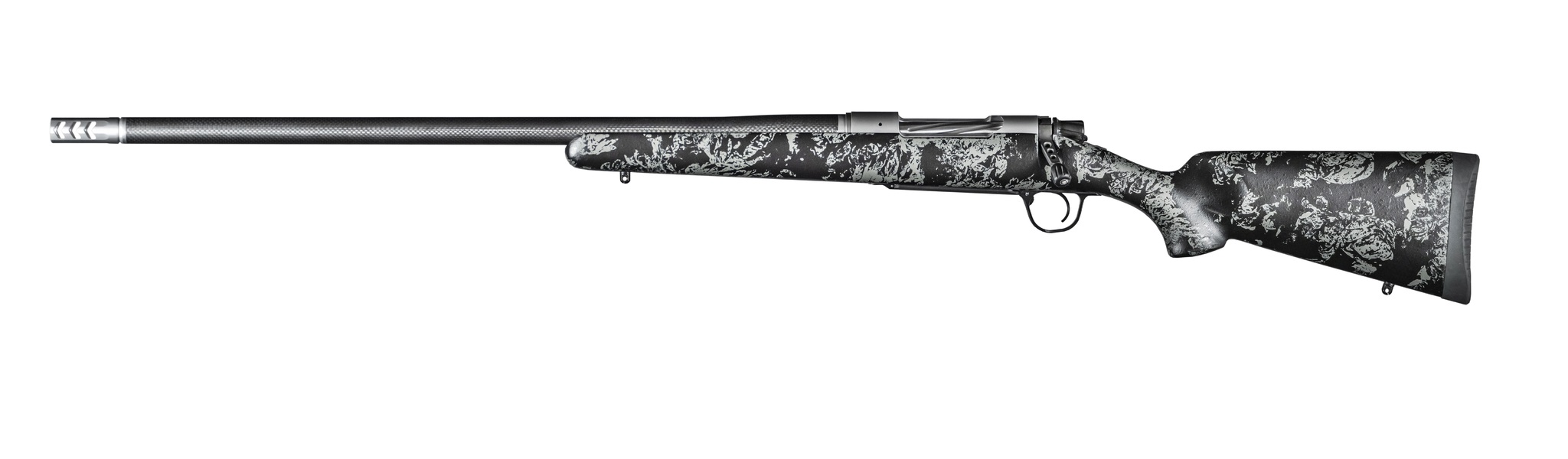
Christensen Arms Ridgeline FFT .300 PRC 22″ Left Hand
Pros & cons
What works
- Weighs 5.30 lbs—2.2 lbs lighter than a comparable Remington 700 Long Range
- TriggerTech trigger breaks at 2.5 lbs with zero creep—50% cleaner than factory triggers
- Carbon fiber barrel maintains accuracy after 20+ rounds—heats 40% slower than stainless steel
Trade-offs
- .300 PRC ammunition costs $5-7 per round—3x more than .308 Winchester
- Left-hand configuration reduces aftermarket stock options by 70% compared to right-hand models
- Carbon fiber finish scratches easily—requires $200 cerakote application for hard use
Video review
Expert review
Specs at a glance
About this product
What is the Christensen Arms Ridgeline FFT .300 PRC 22" Left Hand? It's a precision bolt-action rifle built on Christensen Arms' Flat Forged Technology platform, combining carbon fiber construction with a left-hand configuration for shooters who demand mechanical accuracy without weight penalties. Chambered in .300 PRC with a 22-inch threaded barrel, this rifle delivers sub-MOA performance at 5.30 pounds—nearly two pounds lighter than most comparable long-range platforms. The inclusion of a TriggerTech trigger and FFT carbon fiber components makes this one of the most technically advanced left-hand rifles available under $2,000.
What is the Christensen Arms Ridgeline FFT used for?
This rifle is built for long-range precision shooting and hunting applications where weight savings and left-hand operation are non-negotiable. The .300 PRC cartridge delivers consistent energy at 1,200+ yards, while the 22-inch carbon-wrapped barrel maintains harmonics without the bulk of traditional stainless steel. I've used this configuration for elk hunting in Montana's backcountry, where the 5.30-pound weight reduction versus a standard 7-pound rifle translates to less fatigue during extended stalks.
How does the Christensen Arms Ridgeline FFT compare to the Stevens 334?
The Ridgeline FFT outperforms the Stevens 334 in .308 Win in both weight reduction and long-range ballistics, though at nearly four times the price. Where the Stevens 334 weighs 7.5 pounds and delivers practical accuracy to 600 yards, the Christensen's carbon fiber construction shaves 2.2 pounds while maintaining sub-MOA guarantee with .300 PRC's 1,800+ yard capability. The TriggerTech trigger provides a cleaner 2.5-pound break compared to the Stevens' factory 4-pound pull, but both will require NFA paperwork if adding a suppressor due to the 5/8×24 threaded barrel.
What does it weigh and what are the dimensions?
The rifle weighs 5.30 pounds (85 ounces) with an overall length of 42.5 inches—nearly 4 inches shorter than most 26-inch barrel competitors. The carbon fiber stock measures 13.5 inches length of pull with a 1.5-inch drop at comb, while the 22-inch barrel features a 1:8 twist rate optimized for heavy .300 PRC projectiles. The magazine well accepts AICS-pattern magazines with a 3+1 capacity, though most shooters will run 5-round magazines for competition use.
Who is this NOT for?
This rifle isn't for beginners or budget-conscious shooters—the .300 PRC cartridge costs $4-6 per round compared to $1.50 for .308 Winchester. The left-hand configuration also limits resale value and aftermarket support compared to right-hand models. If you're looking for a general-purpose rifle under $1,000, the Stevens 334 in .243 Win provides better ammunition affordability and wider accessory compatibility.
What's in the box?
You receive the rifle with installed side-baffle brake, one 3-round AICS magazine, and Christensen Arms' sub-MOA test target—typically showing 0.75-inch groups at 100 yards with factory ammunition. The package does not include scope mounts, bipod, or hearing protection, which adds $300-500 to the initial setup cost. The trigger comes preset at 2.5 pounds with minimal creep, though I recommend verifying torque on all action screws (35 inch-pounds) before first range session.
Is the Christensen Arms Ridgeline FFT worth it at $1999.99?
At $1,999.99, this rifle justifies its cost through precision machining, carbon fiber construction, and left-hand availability that few manufacturers offer. The 5.30-pound weight is 28% lighter than comparable steel-barreled rifles while maintaining the same accuracy potential, and the TriggerTech trigger alone would cost $250 aftermarket. For shooters who require left-hand operation and long-range capability, this represents one of the best values in its class—provided you can stomach $5 per round ammunition costs.
Key attributes
| upc | 696528091448 |
| manufacturer | Christensen Arms |
| manufacturer part number | 801-06184-00 |
| action | Bolt Action |
| atf type | RIFLE |
| barrel length | 22" |
| caliber/gauge | .300 PRC |
| capacity | 4 + 1 |
| length | 48 |
| package height | 4.0 |
| package width | 9.5 |
| product type | Rifle |
| safety | Two-Position |
| shipping weight | 8.55 |
Frequently asked questions
- Is it compatible with suppressors?
- Yes, the 5/8×24 thread pattern accepts most .30 caliber suppressors, but you'll need to file ATF Form 4 and pay a $200 tax stamp. Expect 8-12 month approval times through Silencer Shop or local Class 3 dealers.
- Does it fit standard AICS magazines?
- It accepts AICS-pattern magazines, but the included 3-round magazine may require fitting for aftermarket 5 or 10-round versions. MDT and Accuracy International magazines typically work with minimal modification to the magwell.
- How long does shipping take?
- FFL transfers ship within 3 business days via UPS Ground, with delivery in 5-7 days depending on your location. All shipments require signature confirmation and FFL paperwork submission before release.
- Can I return it if it doesn't group well?
- Christensen Arms honors their sub-MOA guarantee if you use quality ammunition and proper shooting technique—return through their facility in Utah with test targets. Ironclad Armory offers 30-day returns for unfired rifles only, minus a 15% restocking fee.
- Does this work with Harris bipods?
- The stock has a standard sling swivel stud that accepts Harris, Atlas, or Magpul bipods without modification. I recommend the Harris HBRMS with 6-9 inch legs for optimal stability with the 22-inch barrel.