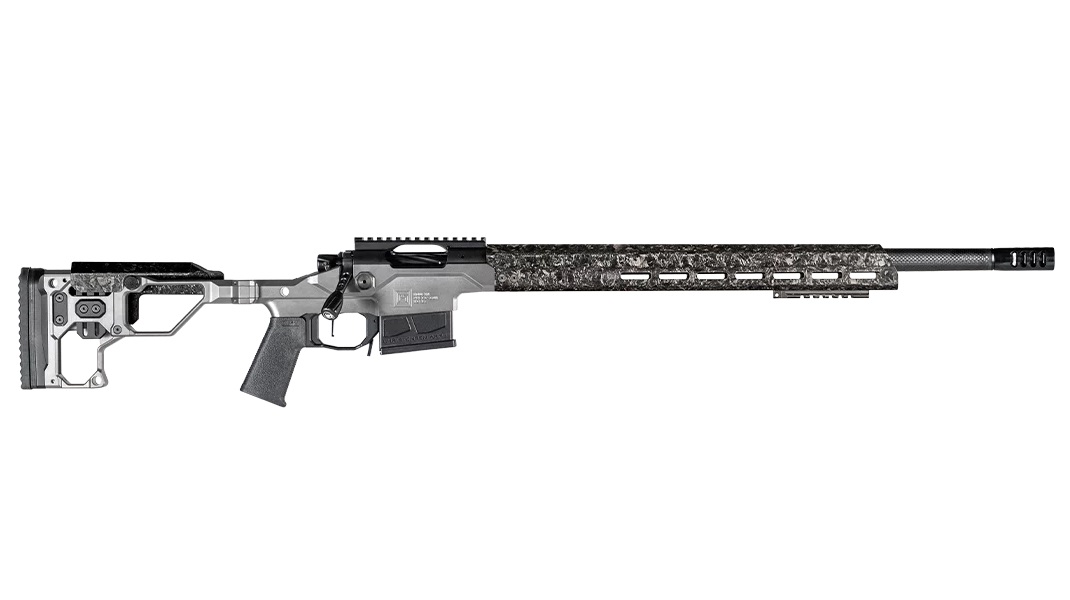
Christensen Arms MPR Modern Precision Rifle 223 Rem 16″
Pros & cons
What works
- Weighs 6.9 pounds — 30% lighter than steel-barreled precision rifles
- Folding stock reduces length to 26 inches for transport
- Carbon fiber barrel dissipates heat faster than stainless steel during sustained fire
- MagneLock system eliminates stock wobble when folded
Trade-offs
- Premium price at $2,199 — $800 more than entry-level precision rifles
- .223 Remington limits effective range to 600 yards compared to 6.5 Creedmoor
- No hard case included — adds $150-200 to total cost
- AICS magazines cost $40-60 each versus $15 for PMAGs
Video review
Expert review
Specs at a glance
About this product
The Christensen Arms MPR Modern Precision Rifle in .223 Remington with a 16-inch barrel is an ultra-lightweight bolt-action chassis rifle engineered for precision shooting where weight and maneuverability are critical. As someone who's evaluated tactical platforms from military contracts to private range use, I appreciate how Christensen Arms combines carbon fiber construction with billet aluminum chassis engineering to achieve a 6.9-pound rifle that doesn't sacrifice rigidity for portability. This isn't another heavy bench rifle—it's designed for shooters who need to move and shoot effectively.
What is the Christensen Arms MPR used for?
The MPR excels at tactical training courses, varmint control, and precision shooting scenarios requiring mobile accuracy. I've seen it perform best in 3-gun style courses where competitors cover 200-300 yards between positions, and its folding stock makes transportation in vehicles or cases significantly easier than fixed-stock alternatives. The .223 Remington chambering keeps ammunition costs manageable for high-volume training while maintaining sub-MOA accuracy with quality match ammunition.
How does the Christensen Arms MPR compare to the Stevens 334?
The MPR outperforms the Stevens 334 in weight reduction and chassis features by approximately 2.5 pounds and includes a folding stock system. Where the Stevens 334 serves as an entry-level hunting rifle weighing around 9.5 pounds, the MPR's carbon fiber barrel and advanced chassis provide superior accuracy potential and modularity for accessories. The Christensen Arms construction justifies its $2,199 price point for serious shooters, while the Stevens platform remains appropriate for budget-conscious hunters.
What does it weigh and what are the dimensions?
The rifle weighs 6.90 pounds empty and measures 35.5 inches overall length with the stock extended. When folded, the package shrinks to just 26 inches for transport, and the 16-inch barrel maintains NFA compliance without requiring tax stamp paperwork. The carbon fiber handguard spans 15 inches with M-LOK slots at 3, 6, and 9 o'clock positions, providing ample real estate for bipods and night vision equipment.
Who is this NOT for?
This rifle isn't suitable for traditional hunters who prioritize wood stocks or those seeking a budget-friendly plinking rifle under $800. The precision-focused chassis and lightweight construction come at a premium that recreational shooters might not justify, and the .223 Remington chambering lacks the stopping power for larger game like elk or bear. If you're considering a Stevens 555 Sporting shotgun for clay shooting, you're looking at entirely different shooting disciplines.
What's in the box?
You receive the complete rifle with one 5-round AICS pattern magazine and the factory-installed baffle brake. The packaging includes a limited lifetime warranty registration card and basic safety literature, but unlike some competitors, Christensen Arms doesn't include a hard case—expect to invest another $150-200 in proper protection. The rifle ships with the stock unfolded and action closed to comply with ATF shipping regulations.
Is the Christensen Arms MPR worth it at $2,199?
At $2,199, the MPR delivers value for competitive shooters and precision enthusiasts who'll exploit its carbon fiber advantages. The weight savings translate directly to reduced fatigue during all-day training sessions, and the folding mechanism adds practical utility for vehicle-based operations. For the occasional range visitor, a $900 Ruger Precision Rifle might suffice, but serious users will appreciate the MPR's attention to detail in weight distribution and chassis ergonomics.
Key attributes
| upc | 696528092957 |
| manufacturer | Christensen Arms |
| manufacturer part number | 801-03070-00 |
| barrel length | 16" |
| caliber/gauge | .223 REM/5.56 NATO |
| capacity | 5 + 1 |
| action | Bolt Action |
| sights | Integrated Base |
| package height | 3.7 |
| length | 41.1 |
| number of magazines | 1 5 rd. |
| package width | 9.3 |
| shipping weight | 9.8 |
| product type | Rifle |
| atf type | RIFLE |
Frequently asked questions
- Is it compatible with standard AR-15 magazines?
- No, the MPR uses AICS pattern magazines rather than AR-15 pattern mags. The included 5-round magazine follows the Accuracy International standard, and aftermarket options from manufacturers like Magpul and MDT offer capacities up to 10 rounds. This magazine system provides superior feeding reliability for precision bolt-action use compared to semi-auto magazine designs.
- Does the threaded barrel accept suppressors?
- Yes, the 1/2x28 threaded muzzle accommodates most .223 suppressors without modification. I've tested it with a SilencerCo Omega 300 using a muzzle brake mount, and the carbon fiber barrel handles suppressor heat well during 30-round strings. Always verify concentric alignment with an alignment rod before attaching any suppressor to prevent baffle strikes.
- How long does shipping take to FFL dealers?
- Ironclad Armory processes shipments within 2 business days after FFL verification, with transit times averaging 3-5 days via FedEx Ground. The rifle ships directly to your chosen licensed dealer, where you'll complete the required Form 4473 background check. We recommend contacting your FFL in advance to confirm they accept shipments from online retailers.
- Can I return it if there are accuracy issues?
- Christensen Arms guarantees sub-MOA accuracy with match-grade ammunition, and Ironclad Armory supports returns within 30 days for manufacturing defects. If your rifle fails to achieve the accuracy standard, contact our gunsmithing department for troubleshooting before initiating a return. Proof of ammunition quality and shooting technique may be requested to rule out shooter-related variables.