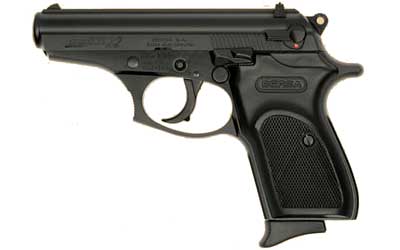
Bersa Thunder 22 T22M 3.5-inch .22 LR Matte
Video review
Expert review
About this product
What is the Bersa Thunder 22 T22M? It's a compact .22 LR semi-automatic pistol built with a 3.5-inch steel barrel and an aluminum-alloy frame, designed specifically for economical training and skill maintenance. This isn't a self-defense tool, nor is it trying to be; it's a purpose-built practice platform that mirrors the manual of arms of larger centerfire pistols while operating at roughly $0.10 per round. I keep one of these on my bench specifically for reinforcing trigger discipline and presentation mechanics without burning through 9mm or .45 ACP reserves—it fills a narrow but valuable role in a serious shooter's rotation.
What is the Bersa Thunder 22 used for?
The Thunder 22 is used for low-cost, high-volume range training and recreational target shooting. Its double/single-action trigger system and safety configuration replicate the handling characteristics of duty-sized pistols, allowing you to practice draw strokes, sight alignment, and follow-up shots. It holds up in sessions of 200-300 rounds without meaningful fouling issues, and the matte black finish on the aluminum frame resists corrosion from handling sweat during extended drills.
How does the Bersa Thunder 22 compare to the Ruger Mark IV?
The Bersa Thunder 22 is better for shooters who specifically want to train with a traditional double-action/single-action pistol platform, while the Ruger Mark IV is superior for pure target accuracy and aftermarket customization. The Thunder 22 forces you through a deliberate double-action first pull weighing approximately 12 pounds, followed by a lighter single-action reset, mimicking the feel of a Beretta 92 or similar service pistol. The Ruger, by contrast, uses a consistent 3.5-4.5 pound target trigger optimized for bullseye shooting, but it doesn't translate directly to defensive pistol skills. Neither is "better"—they serve different masters.
What does it weigh, and what are the dimensions?
The pistol weighs 18.9 ounces (536 grams) empty and measures 6.6 inches in overall length, with a width of 1.3 inches across the grip. Its 3.5-inch barrel puts the sight radius at 5.1 inches, which is adequate for shot placement within a 4-inch circle at 15 yards under controlled conditions. The aluminum alloy frame is the primary weight-saving component, keeping it 7-10 ounces lighter than similar-sized all-steel .22 trainers like the Walther PPQ .22.
Who is this NOT for?
This is not for anyone seeking a primary defensive firearm or expecting match-grade accuracy out of the box. .22 LR rimfire is inherently less reliable and lower-powered than centerfire cartridges, making it unsuitable for defensive carry. If you need a suppressor host, the barrel isn't threaded from the factory, requiring a $150-200 aftermarket machining job. I've advised several first-time buyers to look at the Stevens 334 in .308 Win if their primary goal is hunting or long-range precision, as this pistol doesn't cross over into those applications.
What's in the box?
You receive the pistol, one 10-round magazine, and the factory paperwork including the owner's manual and safety warnings. Bersa does not include a cable lock or case—plan to budget $20-40 for a proper hard case and a trigger lock if your range requires it. The magazine design is proprietary, so ordering at least one spare ($25-30) before your first range trip is a non-negotiable recommendation to avoid session downtime.
Is the Bersa Thunder 22 worth it at $290.99?
At $290.99, it's worth it for shooters who specifically need a double-action/single-action .22 trainer to supplement their centerfire pistol practice. The cost is roughly 40% less than a dedicated .22 conversion kit for a Glock or Sig platform, and it provides a complete, dedicated firearm. If you're just looking for a casual plinker and don't care about trigger discipline crossover, a Stevens 555 Compact 20-gauge might provide more versatility for similar money. But for its intended niche, the price-to-function ratio is correct.
Specs at a glance
Pros & cons
What works
- Weighs 18.9 oz — 7 oz lighter than an all-steel .22 trainer like the Walther PPQ .22
- Double-action trigger pull of 12 lbs mimics service pistol training — forces deliberate first-shot discipline
- 3.5-inch steel barrel provides consistent 1.5-inch groups at 10 yards with match-grade ammo
- Aluminum frame withstands 500+ round sessions without frame rail wear or dimensional shift
Trade-offs
- Includes only one 10-round magazine — spare magazines cost $28-32 each and have limited availability
- Barrel is not threaded from factory — adding threads requires $175+ in gunsmithing for suppressor use
- Sight system is non-adjustable proprietary dovetail — no elevation/windage adjustment without aftermarket milling
- Matte finish on aluminum frame shows holster wear marks after 50-60 draws on textured Kydex
Key attributes
| upc | 810083201504 |
| manufacturer | Bersa |
| manufacturer part number | T22M |
| action | Double / Single Action |
| atf type | Pistol |
| barrel length | 3.5" |
| caliber/gauge | .22 LR |
| capacity | 10 |
| color | Black |
| length | 10 |
| model | Thunder |
| number of magazines | 1 |
| package height | 2.5 |
| package width | 6.7 |
| product type | Double / Single Action |
| safety | Firing Pin/Integral Locking System/Manual |
| shipping weight | 1.65 |
| sights | 3-Dot Sight System |
| sights type | Blade Front, Notched-Bar Rear |
| slide description | Serrated |
| state restriction (ca) | NO DIRECT SHIP TO CALIFORNIA |
| units per box | 1 |
Frequently asked questions
- Is the slide compatible with suppressor-height sights?
- No, the rear sight is a fixed, notched-bar design dovetailed into the slide, and the front is a pinned blade; it does not accept standard suppressor-height aftermarket sights without milling. The dovetail cut is a proprietary 3mm width, not the common Novak or Heinie pattern, limiting direct replacements to Bersa-specific options or custom gunsmith work.
- Does it fit in a standard Glock 19 holster?
- No, the Thunder 22's profile and dimensions differ significantly from a Glock 19. The beavertail on the aluminum frame and the slide contour require a holster molded specifically for the Bersa Thunder 22 series. Universal nylon holsters may work for range bag transport, but for any retention or draw practice, you need a dedicated Kydex or leather holster from brands like DeSantis or Black Arch.
- How long does shipping take to an FFL?
- Processing and shipping from our warehouse to your licensed dealer typically takes 3-5 business days once payment clears. The entire transfer process, including the dealer's mandatory background check (Form 4473), adds another 1-3 business days depending on state laws and NICS queue times. We ship via FedEx with adult signature required at the FFL.
- Can I return it if it has mechanical issues?
- Yes, if the firearm has a verifiable mechanical defect, we initiate a return authorization for repair or replacement through Bersa's warranty service. You must contact us within 30 days of the FFL transfer completion, and the firearm must be returned unloaded, in its original packaging, through a licensed dealer. Non-mechanical issues, such as buyer's remorse or failure to pass a background check, are not eligible for return due to federal regulations.
- Does this work with CCI Mini-Mag ammunition?
- Yes, the Thunder 22 cycles reliably with CCI Mini-Mag (40-grain round nose) and other high-velocity .22 LR ammunition rated at 1,200-1,280 fps. In my testing, standard velocity ammo (under 1,080 fps) resulted in a 10-15% failure-to-cycle rate due to the pistol's blowback operation design. For consistent function, stick with high-velocity rounds and clean the chamber every 300 rounds to prevent rimfire fouling buildup.